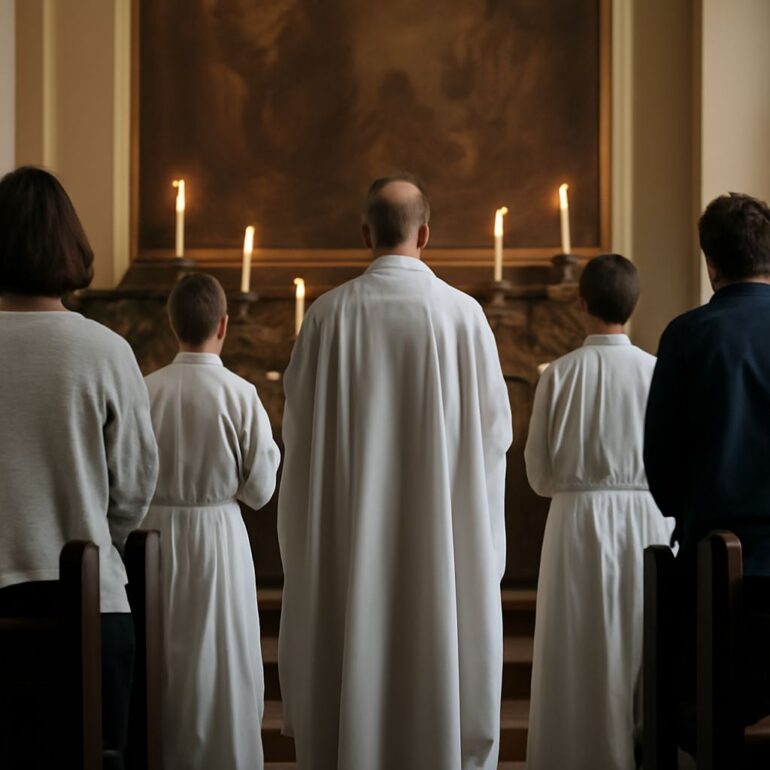
Yes. Catholics are Christians, and Catholicism is one of the major historic traditions within Christianity. The Catholic Church centers its faith on Jesus Christ, the Trinity, his death and resurrection, and the call to live in communion with God and other believers.
The main differences between Catholicism and other Christian traditions involve church authority, the sacraments, worship, and the role of Mary and the saints. This guide explains the shared Christian foundation, distinctive Catholic beliefs, and the Bible tradition Catholics use.
Are Catholics Christian?
Yes. Catholics are Christian because they profess faith in Jesus Christ as the Son of God and Savior of the world. They believe that Jesus became human, died for humanity’s sins, rose from the dead, and will come again.
Catholics also believe in one God who exists as the Trinity: Father, Son, and Holy Spirit. These beliefs are expressed in historic Christian creeds, especially the Nicene Creed, which is also used by many Orthodox and Protestant churches.
Catholicism is therefore not separate from Christianity. It is the largest Christian tradition and traces its teaching, worship, and leadership through the apostles and the early church. Catholic Christians share the central beliefs of Christianity with other Christians, even when their interpretations and practices differ.
What is Catholicism?
What is Catholicism? It is the faith and life of the Catholic Church, a worldwide Christian community united by shared teaching, worship, sacraments, and leadership. The word catholic means “universal,” reflecting the church’s mission to all peoples.
Catholic teaching is guided by the Bible, Sacred Tradition, and the teaching authority of the church, known as the Magisterium. The pope, the bishop of Rome, serves as the church’s chief pastor, together with bishops who lead local churches around the world.
Catholicism includes both belief and practice. It shapes how Catholics worship, understand moral life, pray, receive the sacraments, and serve their neighbors. Local customs may vary, but the church’s central teachings are shared worldwide.
What do Catholics believe? Core teachings and practice
Catholic beliefs begin with the Christian message that God offers salvation through Jesus Christ. Catholics believe that God’s grace is received through faith and lived out through love, worship, moral choices, and service. They also believe that the church has a continuing role in teaching and caring for its members.
- The sacraments: Catholics recognize seven sacraments: Baptism, Confirmation, the Eucharist, Reconciliation, Anointing of the Sick, Holy Orders, and Matrimony. These are visible signs through which God gives grace.
- The Eucharist: During Mass, Catholics receive Communion and believe that Christ is truly present in the Eucharist. The Mass recalls and makes present the saving work of Jesus.
- Mary and the saints: Catholics honor Mary as the mother of Jesus and respect the saints as examples of faithful Christian life. Catholics worship God alone, while asking saints to pray for them, much as Christians ask one another for prayer.
- Church authority: Catholics look to Scripture and Sacred Tradition as sources of faith, interpreted by the church’s teaching office. The pope and bishops have a particular responsibility to preserve and explain Christian teaching.
Catholic worship normally centers on the Mass, especially on Sundays. Catholics also practice personal prayer, confession, fasting, charitable work, and devotion such as the Rosary. Baptism begins a person’s sacramental life, while Reconciliation offers forgiveness for sins after baptism.
What Bible do Catholics use? Canon and translations
What Bible do Catholics use? Catholics use the Christian Bible, but Catholic editions contain a different Old Testament canon from most Protestant editions. Catholic Bibles have 73 books: 46 in the Old Testament and 27 in the New Testament.
The additional Old Testament books are called the deuterocanonical books. They are Tobit, Judith, Wisdom, Sirach, Baruch, and First and Second Maccabees, along with additional sections of Esther and Daniel. Most Protestant Bibles do not include these books in their main canon, although some print them separately as the Apocrypha.
The New Testament is the same 27-book collection used by most other Christians. Catholic teaching regards both Scripture and Sacred Tradition as important sources of revelation, rather than treating the Bible as separate from the church’s historical faith and interpretation.
Common English Catholic translations include the New American Bible Revised Edition (NABRE), the New Revised Standard Version Catholic Edition (NRSV-CE), the Revised Standard Version Catholic Edition (RSV-CE), and the Jerusalem Bible or New Jerusalem Bible. The Douay-Rheims Bible is an older English Catholic translation.
When choosing an approved Catholic translation, check four things: whether it includes the full Catholic canon, whether it has approval from the relevant Catholic authority, whether its language suits your reading level, and whether its notes fit your purpose. A study Bible may provide extensive explanations, while a missal or lectionary may use wording adapted for public worship.
