In Catholic teaching, a sacrament is an outward sign of grace, instituted by Christ and entrusted to the Church. Through visible actions, words, and elements, a sacrament makes God’s grace present and helps people share in divine life.
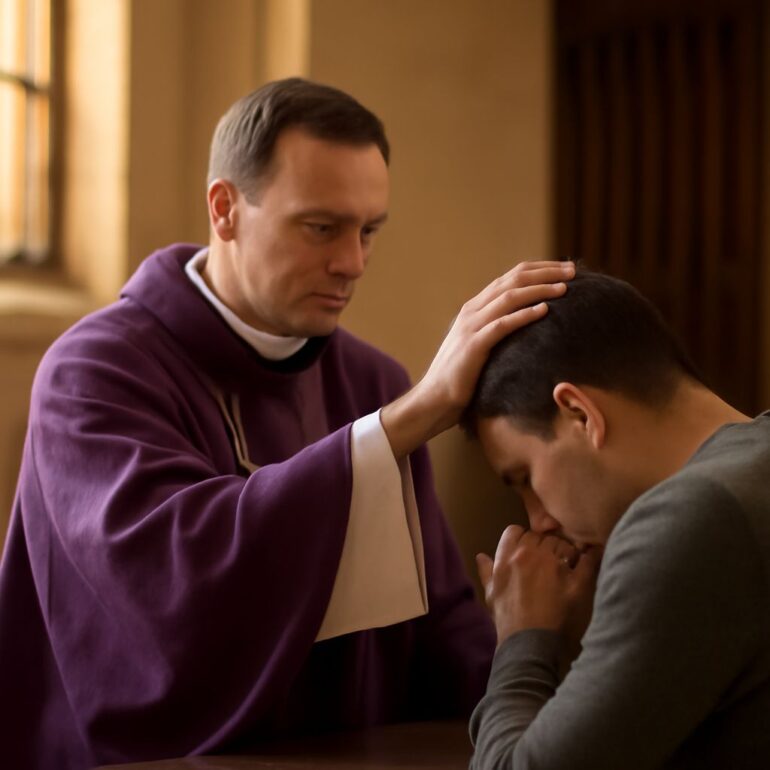
The Church celebrates seven sacraments. They mark key moments of Christian life, strengthen believers, forgive sins, and build up the Church. Reconciliation, also called Confession, offers a practical example of how a sacrament brings God’s grace to a person.
What is a sacrament?
A sacrament is a sacred sign that communicates the grace it signifies. For example, Baptism uses water as a visible sign of cleansing and new life, while the Eucharist uses bread and wine in the sacramental presence of Christ.
Sacraments are not simply reminders or symbols. In Catholic belief, Christ works through them when they are celebrated properly by the Church. The person receiving a sacrament should also approach it with faith and an open heart.
The sacraments are commonly grouped into three categories: initiation, healing, and service. Baptism, Confirmation, and the Eucharist begin and strengthen Christian life. Reconciliation and Anointing of the Sick bring healing, while Holy Orders and Matrimony serve the Church and the wider community.
What are the seven sacraments?
These are the seven Catholic sacraments, with the purpose of each:
- Baptism: Baptism removes original sin, gives new life in Christ, and welcomes a person into the Church. It is the first sacrament and the foundation of Christian life.
- Confirmation: Confirmation strengthens baptismal grace through the Holy Spirit. It deepens a person’s relationship with Christ and gives courage to live and witness as a Christian.
- Eucharist: The Eucharist makes Christ truly present under the forms of bread and wine. Receiving Holy Communion nourishes faith, unites believers with Christ, and strengthens the Church.
- Reconciliation: Reconciliation, or Confession, forgives sins committed after Baptism. It restores friendship with God and the Church through repentance, confession, absolution, and penance.
- Anointing of the Sick: This sacrament brings Christ’s comfort, peace, and strength to people who are seriously ill or weakened by age. It may also bring physical healing if that serves the person’s good.
- Holy Orders: Holy Orders gives bishops, priests, and deacons the grace and authority to serve the Church. Through this sacrament, they preach, lead worship, and care for God’s people.
- Matrimony: Matrimony joins a baptized man and woman in a lifelong covenant. It gives spouses grace to love faithfully, support one another, and welcome and raise children.
Confession guide: How to prepare and participate
This Confession guide applies whether you are going for the first time, returning after many years, or establishing a regular practice.
- Examine your conscience. Quietly review your thoughts, words, actions, and failures to act. Consider the Ten Commandments, the Beatitudes, and your responsibilities to God and other people.
- Be sorry for your sins. Make an act of contrition, with genuine sorrow and a desire to change. Ask God for help in avoiding these sins in the future.
- Choose a time and place. Attend scheduled Confession at a parish, or ask a priest for an appointment. If you are unsure what to do, tell the priest that you need guidance.
- Confess your sins honestly. State the sins you remember clearly and directly. For serious sins, include the kind of sin and, when possible, how often it occurred. Do not hide a sin deliberately, but do not add unnecessary details.
- Listen to the priest. The priest may offer advice and will assign a penance, such as a prayer or an act of charity. Then pray an Act of Contrition when invited.
- Receive absolution. The priest extends forgiveness in Christ’s name through the prayer of absolution. Respond with “Amen” when appropriate, and thank the priest.
- Complete your penance. Do it as soon as reasonably possible. Let the penance support a concrete effort to repair harm, resist sin, and live differently.
What happens during Confession?
Begin by greeting the priest and making the Sign of the Cross. You may say, “Bless me, Father, for I have sinned. It has been [the length of time] since my last Confession.” If this is your first Confession or you are returning after a long absence, say so; the priest can guide you.
Next, confess your sins and listen to the priest’s counsel. He may ask a brief question to understand what you mean, but Confession is not an interrogation. Speak truthfully, avoid blaming others, and maintain a sincere intention to turn away from sin.
The priest assigns a penance and invites you to make an Act of Contrition. After you pray it, he says the words of absolution. You respond, usually with “Amen,” and leave to complete your penance and give thanks for God’s mercy.
