What identifies someone as a Baptist? Baptists belong to a diverse Christian tradition associated with the Reformation and known especially for baptism of professing believers and the responsibility of local congregations. They are Protestants, not a religion separate from Christianity, but they do not belong to a single worldwide denomination with one governing office.
A church in the Baptist tradition may cooperate with a convention or association, or it may describe itself as independent. Its teaching and practice are best understood through its own statement of faith, leadership, and affiliations as well as the history it shares with other Baptists.
Christian Baptist Churches and Their Shared Roots
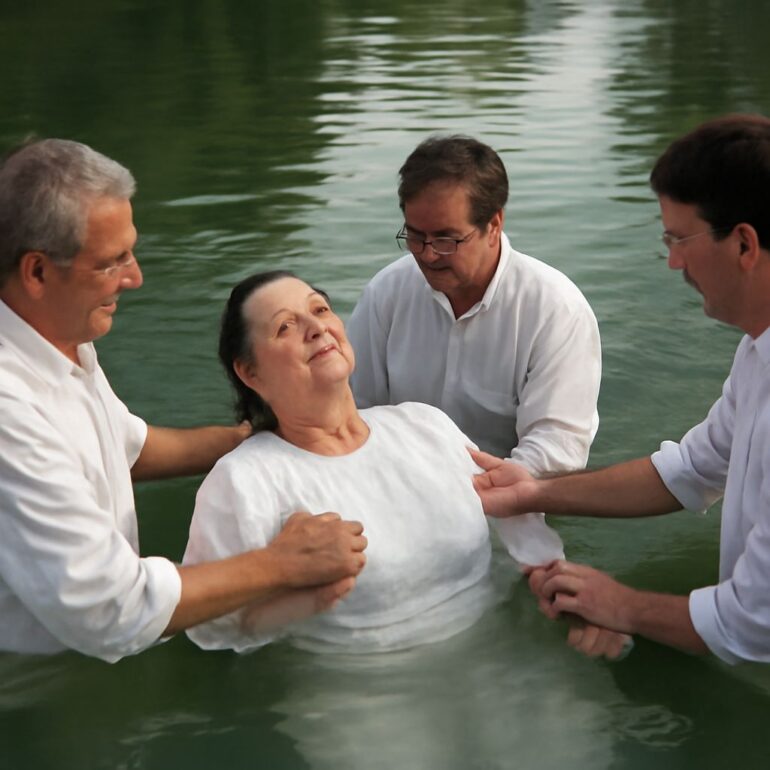
What is a Baptist? In broad terms, a Baptist is a Christian whose faith and church life belong to a family of traditions that emphasize a personal profession of faith before baptism. Many Baptist churches baptize by immersion, placing a believer in water, and understand the local congregation as responsible for its own decisions under Christ.
A Christian Baptist congregation commonly gathers for preaching, prayer, singing, and the Lord’s Supper. Baptists share basic Christian convictions about God, Jesus Christ, and Scripture, but they differ on some questions of theology, worship, ministry, and cooperation. A description of common patterns should therefore leave room for the positions of particular churches.
The Baptist Faith and Message, adopted by the Southern Baptist Convention in 2000, is one example of a published confession. It describes the Bible, salvation, baptism, and church life from that convention’s perspective. It is not a binding statement for every church that uses the Baptist name.
The beginnings of the movement
Baptist history is commonly traced to English-speaking Separatists in the early seventeenth century. These Christians sought congregations distinct from the established Church of England. John Smyth and Thomas Helwys were among the leaders associated with an early congregation in Amsterdam, where the question of baptism followed a personal profession of faith became central.
The movement developed in different directions. General Baptists and Particular Baptists took different positions on theological questions, including the scope of Christ’s atonement. Their churches and later descendants also differed in organization and confession. The Baptist World Alliance presents the movement as a worldwide family with a shared history rather than a single uniform institution.
Baptist communities developed in North America during the colonial period and expanded in later centuries. Religious liberty became an important theme for many Baptists, although their histories also include conflicts and contradictions. In the United States, slavery, segregation, and racism shaped institutional divisions and the formation of independent Black churches and conventions; no one national body tells the whole story.
Baptism, the Lord’s Supper, and local authority
Believer’s baptism normally follows a person’s profession of faith in Jesus Christ. Many Baptist churches practice immersion and regard baptism and the Lord’s Supper as ordinances instituted by Christ. Churches can differ in how they explain those ordinances, who may participate, and whether baptism from another tradition is accepted for membership.
Local autonomy means that a congregation has substantial responsibility for its own affairs. Members may vote on a pastor, budget, property, or affiliation according to the church’s governing documents. Autonomy does not necessarily mean isolation: a church can voluntarily support a mission agency, join an association, or cooperate with other congregations.
A Baptist minister typically preaches, teaches, provides pastoral care, and helps lead worship. Titles, ordination procedures, and decision-making authority differ. Some congregations have multiple pastors and deacons; others have a smaller leadership structure. The church’s own constitution or leadership description is more reliable than assuming every Baptist pastor has identical powers.
Examples of Baptist bodies
The Southern Baptist Convention (SBC) is a network of cooperating churches with national and state organizations. Its description of beliefs emphasizes congregational governance and baptism of believers. The convention’s confession gives a documented reference point, while individual churches remain responsible for their own decisions and relationships with the convention.
American Baptist Churches USA describes a fellowship of congregations with a shared Christian faith and a history of local church freedom. Its structure and priorities should be understood on their own terms, not inferred from the SBC or from an unrelated independent congregation.
The National Baptist Convention, USA, Inc. is an example of a historically Black Baptist body. Black Baptist institutions have developed across several conventions and associations, with distinct histories of worship, education, missions, and public life. One organization cannot stand for all Black Baptist churches or their members.
These examples are types of Baptist churches and cooperating bodies, not a complete classification of every congregation. A church may belong to more than one cooperative network, and a convention’s public documents do not eliminate differences among its local members.
Independent and fundamentalist labels
An independent Baptist church generally emphasizes that it is not governed by an external denomination. It may still belong voluntarily to a fellowship, support shared missions, or work with other churches. Independence describes a relationship of governance; it does not by itself specify every belief, worship style, or institutional connection.
A fundamental Baptist church uses a theological identification associated with commitments its members describe as fundamental to Christianity. Some churches combine this theological identification with an emphasis on independence. A specific church’s doctrinal statement is needed to know how it defines those terms and what practices follow from them.
The label fundamentalist Baptist can appear in scholarship or public discussion, but churches differ in whether they choose it for themselves and what they mean by it. For example, the Independent Baptist Fellowship describes fellowship among Independent Fundamental Baptists. Its self-description is evidence about that fellowship, not a complete account of all churches using either label.
How many Baptist denominations are there?
How many Baptist denominations are there? There is no single count without a definition and date. A researcher may count national conventions, regional associations, international unions, or individual congregations. A church that belongs to two cooperative bodies complicates a simple total, and independent congregations may not be represented in an umbrella organization’s membership list.
The Baptist World Alliance reported 283 member organizations in 138 countries and territories after accepting new members in July 2025. That number counts its own participating bodies, not all Baptist groups worldwide. Some Baptist bodies and independent churches do not belong to the alliance.
In the United States, the 2020 U.S. Religion Census data list multiple Baptist-family bodies and distinguish congregations from adherents. Coverage and definitions vary by reporting organization. A dated source and its unit of measurement are more informative than an unattributed claim that there is one fixed number of groups.
Understanding a particular church
A church’s name is a useful starting point, but it does not settle its beliefs or affiliations. A visitor can read its statement of faith, ask how it practices baptism and Communion, and check whether it belongs to an association or convention. Its constitution and published leadership information can also show how decisions are made.
For a fuller picture, ask the congregation how it understands membership, selects and oversees ministers, and works with other churches. Those answers describe a particular community while preserving the diversity of the wider Baptist tradition.
