The seven sacraments are the central sacramental actions of the Catholic Church. Through them, Catholics receive grace and grow in a relationship with God at important stages of Christian life.
Each sacrament has a distinct purpose, minister, sign, and set of requirements. Reconciliation is the sacrament that restores a baptized person’s relationship with God after sin, while canon law provides the Church’s practical framework for celebrating all the sacraments.
What Are Sacraments? Why Catholics Have Seven
In Catholic teaching, a sacrament is an outward sign of inward grace, instituted by Christ and entrusted to the Church. The words, actions, and material elements used in each sacrament point to what God accomplishes through it.
Catholics have seven sacraments because the Church recognizes seven distinct ways Christ gives grace. They correspond broadly to the beginning, growth, healing, and service of Christian life. The seven are grouped as sacraments of initiation, healing, and service or vocation.
The Seven Sacraments at a Glance
- Baptism: Begins Christian life, forgives sin, and makes a person a member of the Church.
- Confirmation: Strengthens baptismal grace and seals the person with the Holy Spirit.
- Eucharist: Makes Christ truly present under the signs of bread and wine and nourishes the faithful.
- Reconciliation: Forgives sins committed after Baptism and restores communion with God and the Church.
- Anointing of the Sick: Gives spiritual strength, peace, and courage to people who are seriously ill or weakened by age.
- Holy Orders: Ordains bishops, priests, and deacons for service, teaching, and worship.
- Matrimony: Establishes a covenant between a man and a woman, ordered toward their good and the raising of children.
The Sacrament of Reconciliation Explained
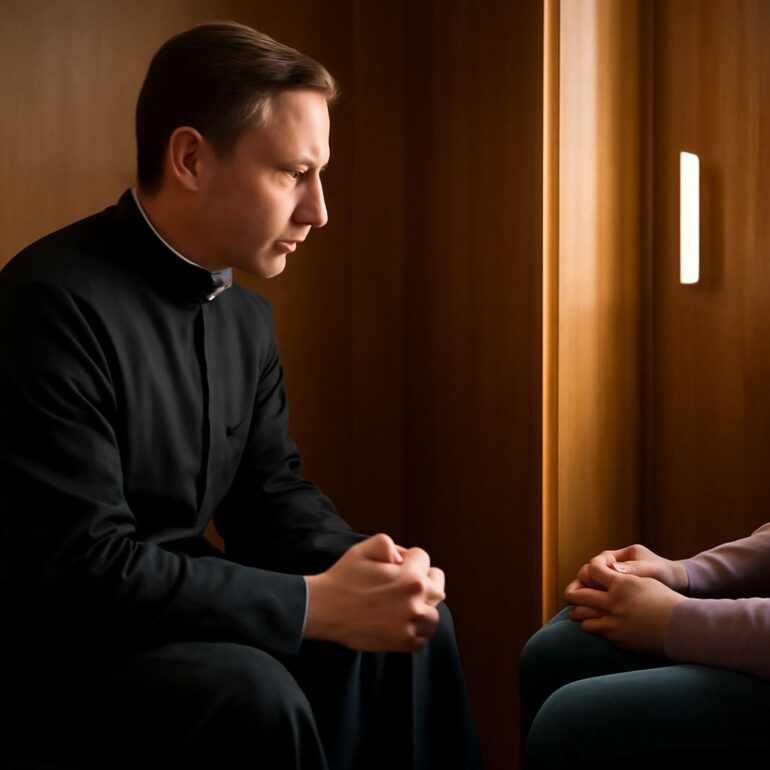
The sacrament of Reconciliation is also called Penance or Confession. It is ordinarily celebrated when a baptized person, sorry for sin, turns back to God through a priest.
These names emphasize different parts of the same sacrament. Confession is the honest telling of sins to the priest. Absolution is the prayer in which a priest, acting in Christ’s name, forgives the sins. Penance is the prayer, action, or work of repair assigned after confession.
- Contrition: The person is sorry for sin and intends to avoid it.
- Confession: The person names serious sins to the priest, including their kind and number as far as reasonably possible.
- Absolution: The priest pronounces the Church’s prayer of forgiveness.
- Penance: The person completes the assigned act and continues turning away from sin.
Only a priest with the necessary authority, called a faculty, can validly grant sacramental absolution. Catholics conscious of grave sin should receive Reconciliation before receiving Holy Communion.
What Is Canon Law? A Practical Guide to Sacramental Rules
Canon law is the internal body of laws and procedures that governs the Catholic Church. It covers the Church’s structure, the rights and duties of its members, worship, marriage, clergy, and the administration of the sacraments.
It does not replace the sacrament’s spiritual meaning. Instead, it helps the Church celebrate each sacrament properly, protect its validity, and keep consistent records.
- Ministers: Canon law identifies who may administer each sacrament. For example, a validly ordained priest celebrates the Eucharist and normally administers Reconciliation. A bishop is the ordinary minister of Confirmation, while bishops, priests, and deacons ordinarily baptize.
- Preparation: Parishes use required preparation for Baptism, Confirmation, First Communion, and Matrimony. This helps candidates understand the sacrament and confirms that they are ready to receive it.
- Eligibility: The law addresses who may receive a sacrament and under what conditions. A person must be baptized to receive most other sacraments, and marriage requires free consent and freedom from an existing marriage bond.
- Records: Parishes record Baptisms, Confirmations, marriages, and other sacramental events. These records help verify reception of a sacrament and support future pastoral decisions.
In this way, canon law supplies an orderly framework for sacramental practice while directing attention to the grace and responsibilities each sacrament represents.
