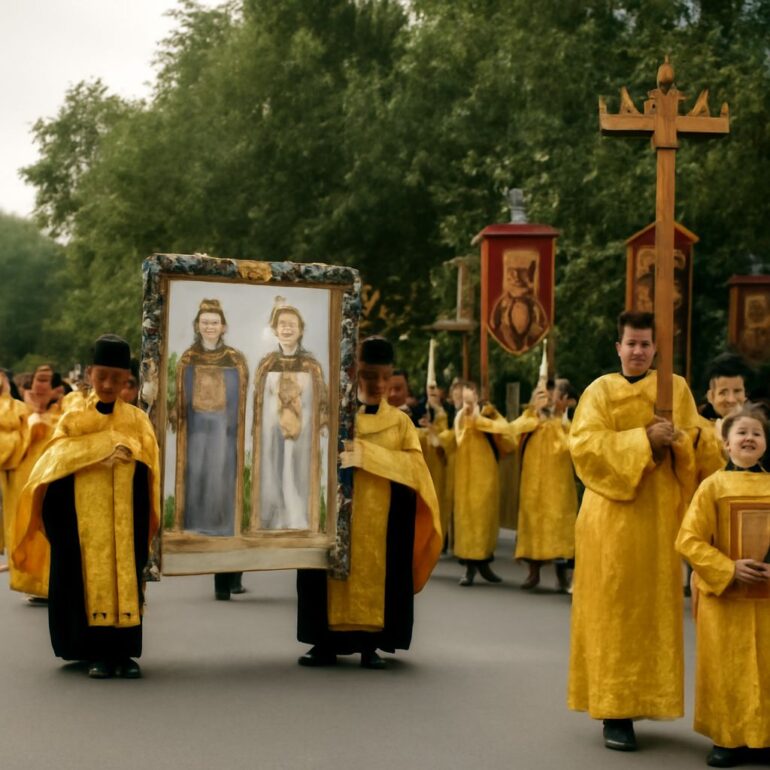
Orthodox Church beliefs are rooted in the Trinity, the incarnation, death, and resurrection of Jesus Christ. They belong to historic creedal Christianity, while their worship, authority, and church life have distinctive forms.
The basic Christian beliefs shared by Orthodox Christians and many other Christians center on one God, Jesus Christ as Lord and Savior, the resurrection, salvation, Scripture, and the life of the Church. The main differences concern how these beliefs are preserved and practiced.
The Basic Christian Beliefs Shared Across Christianity
Most Christians believe in one God who exists eternally as Father, Son, and Holy Spirit. They confess that Jesus Christ is fully divine and fully human, was born of the Virgin Mary, died for humanity’s salvation, rose bodily from the dead, and will come again.
Christians also generally affirm the authority of the Bible, the need for repentance and faith, baptism, communion, the Church, the forgiveness of sins, and eternal life. These shared beliefs are expressed in historic creeds, especially the Nicene Creed.
Core Orthodox Church Beliefs: Trinity, Christ, and Salvation
Orthodox Christians understand the Trinity as one divine essence shared by three distinct Persons: the Father, the Son, and the Holy Spirit. Jesus Christ is the eternal Son who took human nature without ceasing to be God.
Salvation is understood as healing and union with God through Christ. It includes God’s grace, faith, repentance, prayer, participation in the sacraments, and growth in holiness. Orthodox theology often calls this lifelong transformation theosis, or becoming more like God by grace.
Orthodox Christians receive Scripture within Holy Tradition. Tradition includes the teaching of the apostles, the early Church Fathers, the decisions of ecumenical councils, the liturgy, and the Church’s continuing life. Scripture is central, but it is not treated as separate from the community that preserved and interpreted it.
Orthodox Worship and Sacramental Life: Baptism, Communion, and Icons
Orthodox worship centers on the Divine Liturgy. Services commonly include Scripture readings, sung prayers, incense, standing, fasting seasons, and ancient forms of blessing. Worship is intended to involve the whole person and connect the congregation with heaven and the historic Church.
The Orthodox Church recognizes baptism, chrismation, communion, confession, marriage, ordination, and anointing of the sick as sacraments, also called mysteries. Infants are normally baptized and chrismated, then receive communion with the gathered Church.
Icons are painted images of Christ, Mary, and the saints. Orthodox Christians do not worship the wood or paint; they honor the person represented. Icons support prayer and teach the belief that God truly entered human history in Jesus.
Orthodox vs a Non-Denominational Church: Authority, Governance, and Practice
Orthodox authority rests on Scripture as read within Holy Tradition, the historic creeds, bishops, councils, and the shared worship of the Church. Orthodox Christians see continuity with the apostolic Church as an important mark of Christian faith.
Governance is shared among bishops and synods. Orthodox churches are organized as self-governing local churches, such as the Greek, Antiochian, and Orthodox Church in America traditions, rather than under one universal bishop with centralized control.
A non-denominational church is not one centralized tradition. Many are locally governed by pastors, elders, or congregational votes, and they usually place strong emphasis on the Bible, preaching, personal conversion, and flexible worship. Their music and services may be contemporary, though practices vary widely.
Baptism and communion also differ. Orthodox churches normally baptize infants and regard communion as a true sacramental participation in Christ, while non-denominational churches often practice believer’s baptism and understand communion as an ordinance or memorial. Doctrinal variation is therefore usually greater among non-denominational churches than within Orthodox worship and teaching.
