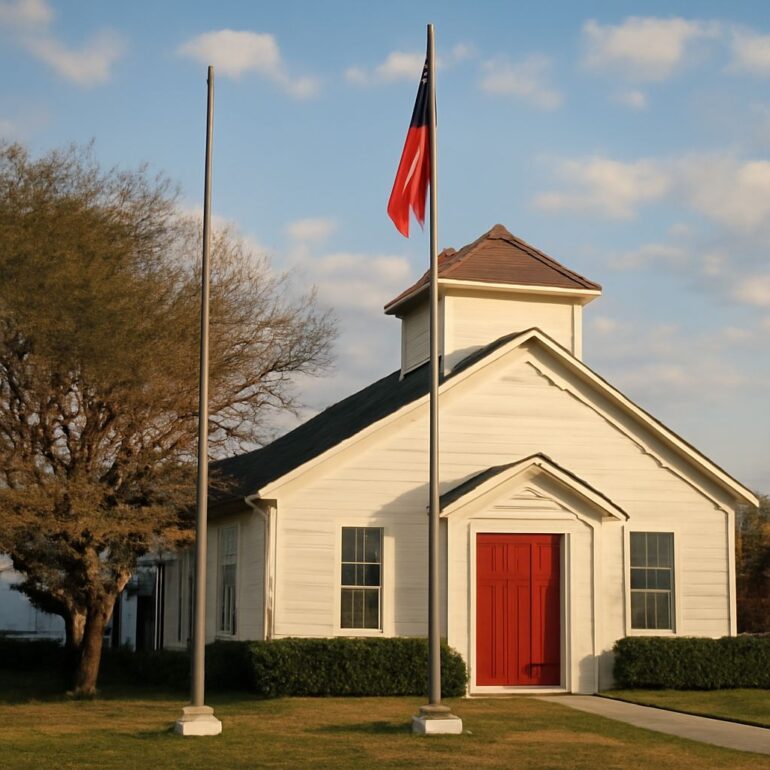
Non-denominational church beliefs usually reflect a local congregation’s statement of faith rather than one universal creed. Many are evangelical and affirm the Bible’s authority, the Trinity, Jesus Christ’s death and resurrection, salvation by grace through faith, and the call to make disciples.
Presbyterian churches belong to a defined Reformed tradition with shared confessions, covenant theology, two sacraments, and elder-led governance. The main difference is structure: non-denominational churches are usually independent, while Presbyterian churches are connected through regional and national bodies.
Non-Denominational Church Beliefs: What They Mean
Most non-denominational congregations teach that Scripture is the final authority for faith and practice. Their services often focus on Bible preaching, personal conversion, prayer, contemporary worship, and practical Christian discipleship.
Many also teach that people receive salvation through faith in Christ, not through church membership or religious works. Baptism and communion are commonly practiced as important acts of obedience, although churches may describe them as ordinances rather than sacraments.
- Baptism: Many churches emphasize baptism after a person personally professes faith, often by immersion.
- Communion: The Lord’s Supper is usually understood as a memorial or proclamation of Christ’s death.
- Worship: Services range from contemporary music and informal preaching to more traditional forms.
Non-Denominational Church Definition: Governance and Variation
A non-denominational church is generally a congregation that does not formally belong to a historic denomination or submit to its denominational structure. It may be founded by a pastor, a local group, or a ministry network, but the congregation normally determines its own leadership, budget, programs, and statement of faith.
That independence explains why non-denominational church beliefs can differ substantially. One church may be Baptist-like in its baptism and theology, another may be charismatic, and another may follow a broadly Reformed or evangelical approach. The label does not provide a binding doctrine shared by every congregation.
Leadership also varies. Some churches are pastor-led, while others use a board of elders, deacons, or a member vote. Visitors should read the church’s statement of faith and learn how it handles accountability, membership, baptism, communion, and major decisions.
Core Presbyterian Doctrine and Governance
Presbyterian doctrine is rooted in Reformed theology and typically emphasizes God’s sovereignty, human sin, salvation by grace, and the importance of Scripture. Many Presbyterian churches also stress covenant theology, which understands God’s relationship with his people through biblical covenants and connects the church’s life to the larger story of redemption.
Presbyterians commonly recognize baptism and the Lord’s Supper as the two sacraments instituted by Christ. Because baptism is tied to God’s covenant promise, many Presbyterian churches baptize both professing adults and the children of church members; practices and explanations can vary among Presbyterian bodies.
Historic confessions guide Presbyterian teaching. Depending on the denomination, these may include the Westminster Standards, the Heidelberg Catechism, or other Reformed statements. Governance is normally led by elders: a local session oversees the congregation, while presbyteries and broader assemblies provide connection, review, and accountability.
Non-Denominational and Presbyterian Churches Compared
Both models may preach the Bible, confess Christ as Lord, and call people to Christian faith and discipleship. Their differences become clearer when authority and church practice are compared directly.
- Authority: A non-denominational church usually follows its own statement of faith and local leaders. A Presbyterian church interprets Scripture within an established confessional tradition.
- Salvation: Both may teach salvation by grace through faith, but Presbyterian churches usually express that teaching through a more defined Reformed framework, including strong emphasis on God’s initiative and sovereignty.
- Baptism and communion: Non-denominational churches often favor believer’s baptism and view communion as an ordinance. Presbyterians practice two sacraments and commonly include infant baptism.
- Worship: Non-denominational services can be highly flexible and contemporary. Presbyterian worship is also diverse, but it is shaped more consistently by Reformed theology and church order.
- Leadership: Non-denominational governance is local and can be pastor-led or elder-led. Presbyterian governance connects local elders with regional and wider councils.
