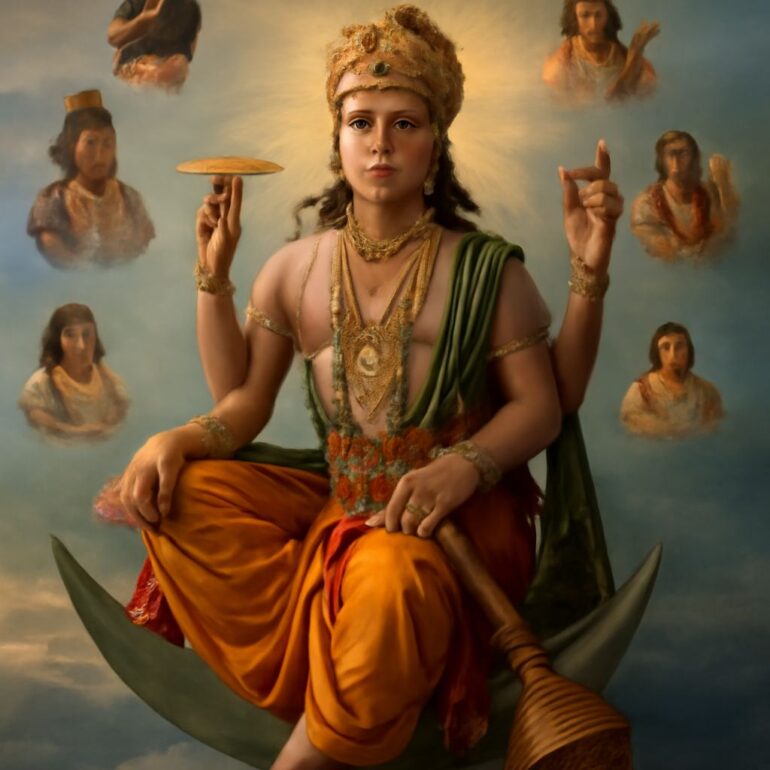
Vishnu, the Hindu god known as the preserver, holds a critical role in Hinduism. He is one of the principal deities in the religion and is often worshipped for his role in maintaining the universe. As part of the Hindu trinity, alongside Brahma and Shiva, Vishnu plays a vital part in the cosmic functions of creation, maintenance, and destruction. His importance is not only spiritual but also cultural, influencing various aspects of public life and art.
The Role of Vishnu in Hinduism
In Hinduism, Vishnu is revered as the god of preservation and protection. He is responsible for sustaining the order and harmony in the universe. Unlike Brahma, the creator, or Shiva, the destroyer, Vishnu’s role is to protect and preserve the world from chaos and destruction. This balancing act makes him a central figure in Hindu worship and mythology.
Vishnu is often depicted with four arms, each holding symbolic items: a conch shell, a discus, a lotus, and a mace. These items represent different aspects of life and cosmos—sound, control, purity, and power. Vishnu’s consort, Lakshmi, the goddess of wealth and prosperity, often accompanies him, highlighting his role in maintaining balance and prosperity.
Avatars of Vishnu
Vishnu is known for his avatars, or incarnations, that descend to earth to restore dharma, or moral order. The most famous avatars of Vishnu include Rama and Krishna, who are central characters in the epic stories of the Ramayana and the Mahabharata.
The ten principal avatars, known as the Dashavatara, include Matsya (the fish), Kurma (the tortoise), Varaha (the boar), Narasimha (the lion-man), Vamana (the dwarf), Parashurama (the warrior with an axe), Rama (the prince), Krishna (the divine cowherd), Buddha (the philosopher), and Kalki (the future warrior). Each avatar comes into being to perform a specific task, often to defeat demons or evil forces threatening the world’s balance.
Vishnu’s Influence in Public Life
Vishnu’s influence extends beyond religious rituals and texts into art, culture, and daily life. Temples dedicated to Vishnu, such as the famous Tirupati Balaji Temple in India, attract millions of devotees annually, reflecting his significant cultural impact. These temples are centers for spiritual growth and social activities, contributing to the community’s cohesion and identity.
In art and literature, Vishnu’s stories and avatars inspire countless works, from ancient sculptures and paintings to contemporary films and books. His tales convey moral lessons and philosophical teachings that resonate with people across ages and cultures.
Moreover, festivals such as Diwali and Holi have ties to Vishnu’s narratives, celebrating the triumph of good over evil. These festivals are not only religious observances but also cultural celebrations that bring people together, promoting values of love, hope, and unity.
