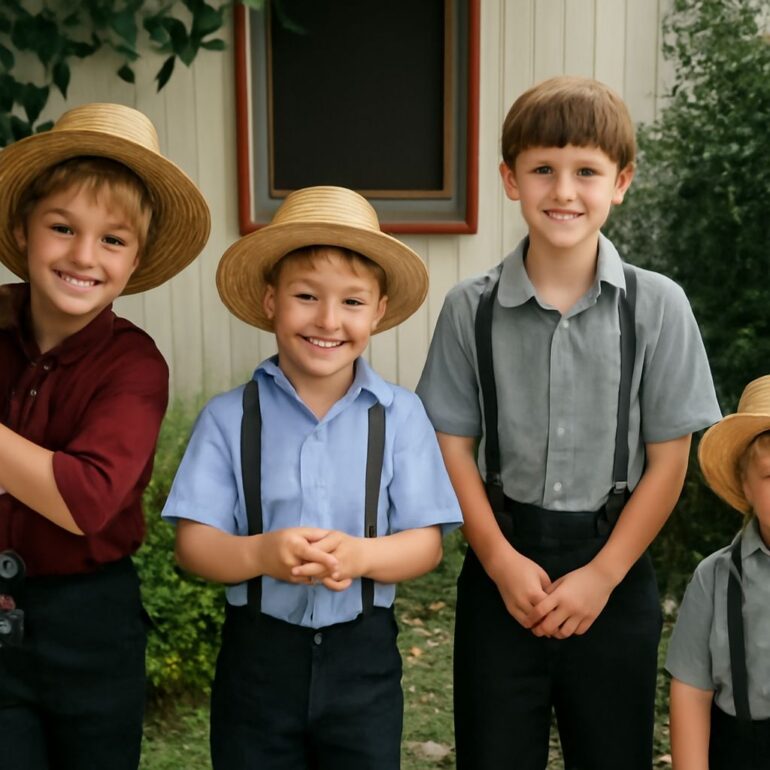
The Amish community is often recognized for its traditional lifestyle and distinct religious practices. Originating from the Anabaptist tradition, the Amish religion emphasizes simplicity, humility, and a strong sense of community. While many people might wonder if the Amish are Jewish due to their communal lifestyle and emphasis on religious practice, they are, in fact, quite different. Let’s explore the core aspects of the Amish religion, how it differs from Judaism, and the structure of the Amish family life.
The Amish Religion
The Amish religion is rooted in Christianity and was established in the late 17th century by followers of Jakob Ammann, a Swiss Anabaptist leader. Their religious beliefs focus on living according to the teachings of the New Testament. Central to their faith is the concept of Gelassenheit, which means surrendering to the will of God, humility, and community over individualism.
Amish services usually take place in homes rather than churches and are characterized by a combination of singing, preaching, and prayer. Baptism is a key rite, occurring during adolescence, symbolizing a personal commitment to the Amish faith. The Amish prioritize community harmony and separation from the modern world, which is reflected in their rejection of electricity and most technology.
Differences from Judaism
While both the Amish and Jewish communities place high value on religious practice and community, their beliefs and rituals are distinct. The Amish are Christians, and their practices are based on the teachings of Jesus Christ and the Bible, particularly the New Testament. In contrast, Judaism is a monotheistic religion rooted in the Hebrew Bible, known as the Tanakh, which includes the Torah.
Judaism has a rich tapestry of rituals such as Sabbath observance, dietary laws (kashrut), and festivals like Passover and Hanukkah. The Amish, on the other hand, focus on simple living and self-sufficiency, avoiding engagement with modern technology and societal norms outside their community. Their religious practices are less centered on ritualistic observance and more on daily living according to biblical principles.
Amish Family Structure
The Amish family is a cornerstone of their community and plays a vital role in maintaining their lifestyle and beliefs. Families are typically large, with parents and children often living together in a shared household. This close-knit family unit supports the community’s agricultural lifestyle, with roles clearly defined among family members to maintain their farm and household.
Children are integral to Amish life, contributing to household chores and farm labor from a young age. Education usually occurs in local Amish schools, which typically go up to the eighth grade. This educational approach focuses on practical knowledge to prepare children for life within their community.
Marriages within the Amish community are viewed as lifelong commitments and are often arranged within the community. The family unit extends beyond biological ties to include communal relationships, where the well-being of each member is prioritized. These strong family connections help preserve the Amish way of life across generations.
