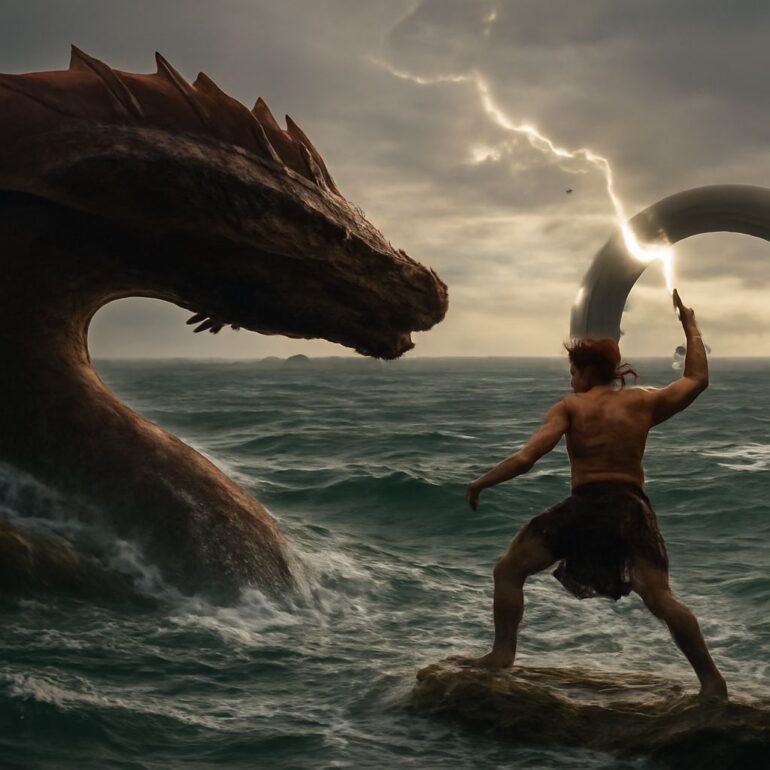
Jormungandr, often known as the Norse Mythology World Serpent, is one of the most fascinating creatures in ancient legends. This massive serpent, also called the Midgard Serpent, plays a crucial role in the stories and beliefs of Norse mythology. Understanding Jormungandr involves exploring its legendary origins, its vital role in epic tales, and the symbolic meanings it carries.
The Legend of Jormungandr
According to legend, Jormungandr is one of the three monstrous children of the mischievous god Loki and the giantess Angrboda. Alongside Fenrir, the giant wolf, and Hel, the ruler of the underworld, Jormungandr holds a crucial place in Norse myths. The serpent was cast into the ocean by Odin, the chief of the gods, where it grew so large that it encircled the world, biting its own tail.
This legendary creature’s name, Jormungandr, translates to “huge monster,” reflecting its immense size and power. As the Midgard Serpent, it resides in the ocean surrounding Midgard, the world inhabited by humans. Its presence in these waters symbolizes a boundary between order and chaos, an ever-present threat that looms over the world.
Role in Norse Mythology
In Norse mythology, Jormungandr is most famously associated with Ragnarok, the end of the world, where it plays a pivotal role. During this apocalyptic event, Jormungandr emerges from the sea, spewing venom and causing massive floods. It battles Thor, the god of thunder, in a fearsome duel that ultimately leads to both their deaths.
The narrative of Ragnarok underscores Jormungandr’s importance as a harbinger of destruction and renewal. The creature’s battle with Thor is a symbol of the inevitable clash between order and chaos, a theme central to Norse beliefs.
Symbolism and Interpretation
Jormungandr holds deep symbolic meaning within Norse mythology. As a serpent encircling the world, it represents the cycle of life, death, and rebirth. The image of Jormungandr biting its own tail is akin to the Ouroboros, a symbol of eternity and infinity in various cultures.
Moreover, Jormungandr’s interactions with other gods, especially Thor, highlight themes of balance and the constant struggle between opposing forces. Its presence as both a protective barrier and a destructive force reflects the complex nature of the world and the delicate balance that sustains it.
In contemporary interpretations, Jormungandr’s symbolism extends to issues of environmental balance and the interconnectedness of ecosystems. The serpent’s ability to encircle the world metaphorically speaks to the global nature of contemporary challenges and the need for harmony with nature.
Jormungandr’s story from Norse mythology continues to captivate and inspire, offering rich insights into ancient beliefs and their resonance with modern themes. Whether viewed as a mythic monster or a profound symbol, Jormungandr remains a central figure in the tapestry of Norse legends.
