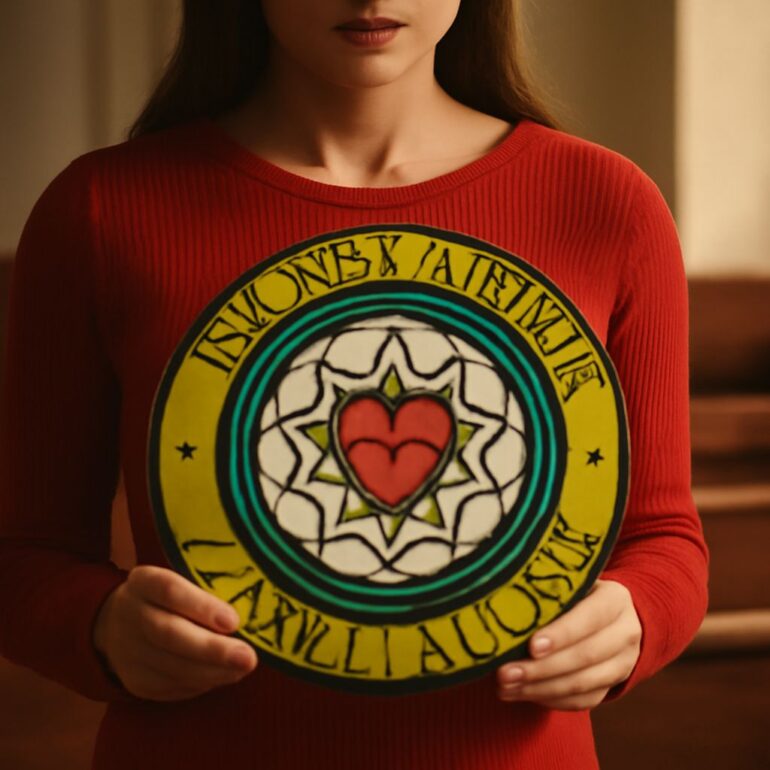
The Sunday observance of the Reformation is a Protestant occasion for remembering a movement that reshaped Western Christianity. What does this Reformation observance on Sunday mean? It brings that history into worship, often on the Sunday before October 31. Reformation Day itself falls on October 31, the anniversary associated with Martin Luther’s 1517 challenge to church practices.
The dates are commemorations; the Reformation was a much longer series of religious and social changes. Lutheran and Reformed churches have their own ways of marking the occasion, while Catholic and Protestant accounts also attend to the divisions and dialogue that followed.
What Is Reformation Sunday and when is it observed?
A congregation marking Reformation Sunday sets aside a service to reflect on the Reformation’s religious legacy. It may use particular Scripture readings, prayers, hymns, and a sermon. The day is especially associated with Lutheran and Reformed traditions, though their practices differ and individual congregations make choices within their own church’s guidance.
What is Reformation Sunday in relation to October 31? It is a Sunday observance associated with Reformation Day, rather than a fixed date on the civil calendar. The Evangelical Lutheran Church in America (ELCA), for example, lists October 31 as a lesser festival and permits it to be observed on a Sunday. Its 2026 teaching resource marks the observance on Sunday, October 25; October 31 that year falls on a Saturday. The calendar thus illustrates the distinction between the anniversary and the service held around it.
The choice of date is practical as well as liturgical: Sunday is when many congregations ordinarily gather. For a first-time visitor, the meaning of this Sunday’s Reformation observance becomes clearer through the local service: its bulletin identifies the readings and music, while its sermon interprets the history through the congregation’s faith. The particular church’s calendar determines the date and format. In other years October 31 may itself fall on a Sunday.
Why October 31 matters
On October 31, 1517, Luther was a Catholic priest and professor of theology in Wittenberg, in what is now Germany. He sent a letter to Archbishop Albrecht of Mainz concerning indulgence preaching, enclosing propositions that came to be known as the Ninety-Five Theses. An indulgence in Catholic teaching concerns the remission of temporal punishment for sins whose guilt has been forgiven. Luther objected to the promotion of indulgences and to the spiritual confidence he believed it could encourage.
The theses proposed an academic disputation, or formal debate. An account from the Library of Congress explains that they circulated in print in several German-speaking cities. The familiar story of Luther personally hammering them to the Wittenberg church door is a traditional image; the Library of Congress describes the posting as reported. The letter and the surviving printed text provide firmer points of reference than the details of that scene.
The date became a powerful historical marker, but the movement did not spring fully formed from a single act. Disputes over authority, Scripture, salvation, and worship developed over years. Printing helped arguments travel, while rulers, universities, clergy, and ordinary believers responded in different ways. The resulting changes reached beyond Wittenberg and produced several distinct Protestant traditions.
From a dispute to separate churches
Luther’s disagreements with church authorities widened. The question of justification—how people are brought into a right relationship with God—became central to Lutheran teaching and to Catholic responses. Disputes also concerned the authority of the pope and councils, the sacraments, and the life of the church. Luther was excommunicated in 1521. A later milestone in Lutheran history was the Augsburg Confession of 1530, a statement of faith presented to Emperor Charles V.
Reform also took other forms. In Swiss cities, Huldrych Zwingli and later John Calvin were important figures in the development of Reformed Christianity. Their movements had points in common with Luther’s, including emphasis on Scripture, but did not agree with him on every question. Presbyterian churches belong to a Reformed family with its own history of confessions, church government, and worship. The meaning of a Sunday service for the Reformation in a Presbyterian setting includes reflection on that continuing history: the Presbyterian Historical Society offers material on the 1934 Barmen Declaration, a response to pressures on German churches under Nazi rule. Political power and local conditions shaped how reforms were received in different places.
The Catholic Church responded through debate, discipline, and its own reforms. The Council of Trent, meeting in stages from 1545 to 1563, addressed doctrine and church life amid the divisions. The history includes coercion and religious conflict as well as theological argument. It is therefore more accurate to speak of a complex European and eventually global process than to treat one anniversary as a complete account of it.
How worship can look
In a Lutheran service, the Sunday observance of the Reformation can express the meaning of renewal through Scripture and prayer. The ELCA’s 2026 teaching resource uses Jeremiah 31:31–34 and John 8:31–36 to consider covenant, truth, and freedom. The ELCA’s worship guidance lists red as the color for the day; it may appear in church furnishings or vestments. A congregation’s sermon and music give the occasion their local expression.
The Presbyterian Historical Society presents the occasion as a celebration of the tradition grounding Presbyterian faith. It identifies the last Sunday in October for the observance and provides historical material for congregations. The Barmen material, for example, connects an annual service to a later question about the church’s relationship to political power.
For both traditions, a service may include singing, Scripture, preaching, and prayer, but no single program represents every congregation. Some may offer historical education or a community event alongside worship. A Reformation Day celebration can therefore be a religious service, a teaching event, or a combination arranged by a particular church. A celebration of Reformation Day may also take place on October 31 itself, depending on the local calendar.
A congregation’s website can also identify any special gathering outside worship. Visitors who want to join a discussion or community event can check whether it takes place before or after the service.
A shared history and continuing dialogue
For Catholics, the Protestant movements are part of a history that includes separation from the Catholic Church. In recent decades, dialogue has sought more precise understanding of both shared convictions and remaining differences. In 1999 the Catholic Church and Lutheran World Federation signed the Joint Declaration on the Doctrine of Justification, an agreement addressing an issue at the heart of their historical dispute.
A joint Catholic-Lutheran statement in 2017 described gratitude for insights gained through the Reformation and asked forgiveness for injuries Christians had inflicted on one another. It also acknowledged unresolved questions about church, Eucharist, and ministry. The commemoration thus can make room for historical honesty and dialogue alongside the convictions of a particular community.
Is this a Catholic holy day? No. It is principally a Protestant observance; Catholics and Protestants may nevertheless take part in shared historical study or ecumenical prayer. For a particular event, the host church’s announcement will explain its purpose and participants.
