A prayer associated with Fatima often means the short appeal to Jesus beginning “O my Jesus,” which some Catholics say after each decade of the Rosary. Other texts connected with the Portuguese shrine include prayers attributed to an angel and prayers addressed to Mary. The opening words and the person addressed help identify the one a reader intends.
A prayer to Our Lady of Fatima is addressed to the Blessed Virgin Mary; the familiar decade prayer is addressed to Jesus. Both belong to a wider devotional tradition, but their purposes and places in prayer differ.
Our Lady of Fatima Prayer and the Rosary Decade
The U.S. Conference of Catholic Bishops’ guide to the Rosary gives the text beginning “O my Jesus” and places it after a decade. It describes the prayer as requested by the Blessed Virgin Mary at Fatima. This petition asks Jesus for forgiveness, protection from hell, and mercy for souls, especially those most in need. The guide says that some people add it at that point; it does not present the addition as obligatory for every person praying the Rosary.
A decade is a group of ten Hail Marys, preceded by an Our Father and followed by a Glory Be. During the decade, those praying meditate on a mystery, an event or aspect of the lives of Jesus and Mary. The USCCB guide places the additional appeal after the Glory Be. A typical set of five decades repeats that pattern five times, with a different mystery announced for each decade.
The words are short enough to learn as a unit, but their setting gives them a particular role. The preceding prayers and meditation focus attention on a mystery; the added petition then turns to forgiveness and mercy. A person using a printed Rosary guide can follow the order shown there. When praying with a group, listening to the leader makes it easier to follow the form being used.
The Shrine of Fatima’s collection also publishes an English form of the decade petition among prayers it attributes to Our Lady. Its wording differs slightly from the USCCB version. The two texts share the appeal to Jesus for forgiveness and for souls; a reader seeking a particular wording can compare the sources directly.
Why the Name Can Point to More Than One Text
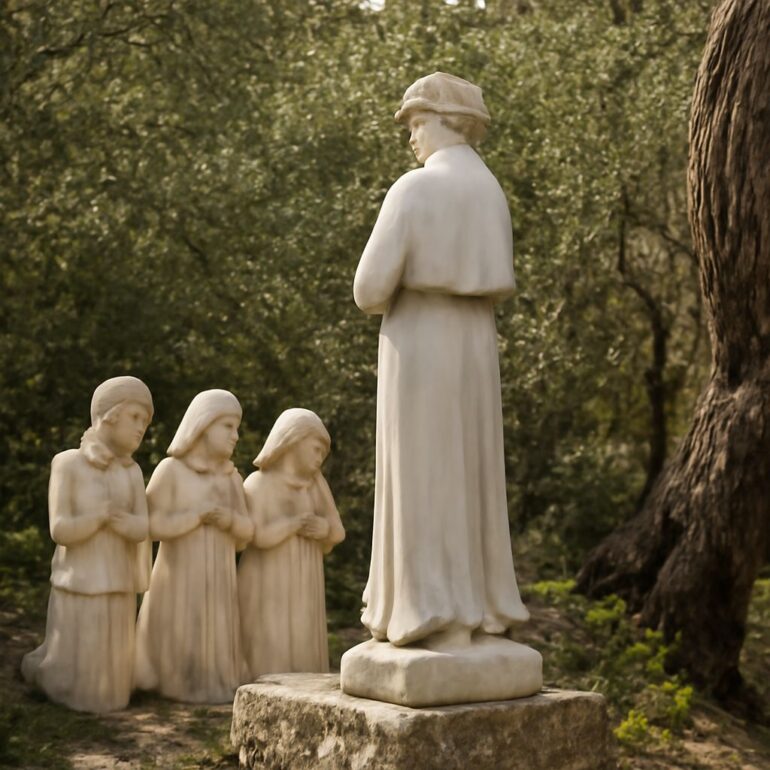
Fatima is the Portuguese place associated with reported apparitions to three shepherd children in 1917. The shrine’s account also describes prayers connected with an angel and the children. The name of the place therefore serves as a broad label for several devotional texts, each with its own speaker, addressee, and emphasis.
The phrase “the Fatima prayer” often points to the Rosary petition just described. In a different setting, a speaker may mean one of the angel prayers, an offering, or a later prayer addressed to the Virgin of Fatima. The title alone cannot settle which text is intended. An opening phrase is a better clue: “O my Jesus” points toward the decade prayer, while “My God, I believe” identifies a different appeal.
This distinction also helps when comparing prayer cards. A card may include several texts under one heading or print only the first lines of a longer prayer. A parish booklet may also provide a response for a group, so its order is helpful when joining a shared devotion for the first time. The reader can look for the addressee, compare the first sentence, and then use a named source for the full form. Those details are more reliable than the card’s general title alone.
The Prayers Associated With the Angel
The shrine’s English collection of Fatima prayers groups several texts under prayers taught by the angel. One begins by addressing God with declarations of belief, adoration, hope, and love. It then asks pardon for those who do not believe, adore, hope, or love. The shrine describes the angel as teaching the children to open their hearts to God and to others through prayer.
Another angel prayer addresses the Holy Trinity: Father, Son, and Holy Spirit. It includes adoration, an offering of Jesus Christ present in the tabernacles, and a request for the conversion of sinners. A tabernacle is the place in a Catholic church where the Eucharist is reserved. The longer prayer’s references to the Eucharist and reparation give it a different emphasis from the brief Rosary petition.
Reparation in this setting means an act offered in response to sin or offense against God. The term appears in the shrine’s texts as part of a pattern of worship and concern for others. The reader does not need to merge the prayers into a single formula: each can be read on the shrine’s page with its own heading and wording.
A separate offering attributed by the shrine to Our Lady addresses Jesus and speaks of love, the conversion of sinners, and reparation to the Immaculate Heart of Mary. It is another of the prayers from Fatima, but it is not the “O my Jesus” petition placed after a Rosary decade. The opening and subject matter distinguish the two even though both address Jesus.
A Prayer Addressed to Mary
Someone seeking an Our Lady of Fatima prayer may intend to address Mary directly and ask for her intercession. In Catholic usage, intercession means asking a saint to pray to God on one’s behalf. A prayer to Mary under her title of Our Lady of Fatima can express trust in her intercession. The addressee is the clearest distinction from the decade prayer, which asks Jesus for mercy.
The shrine provides a Jubilee Prayer of Consecration that addresses Mary as Virgin of the Rosary of Fatima. It asks for guidance and speaks of consecration to God through her. Consecration here is an act of dedication. This is a particular prayer supplied by the shrine for its jubilee, not a second name for the decade petition.
A reader looking for words to honor Mary can use that published text or follow a prayer provided by a parish. The shrine page labels its prayer and gives the complete wording, allowing a reader to identify the source and intended setting. If a family or group uses another version, its first line can help locate the same text again.
Choosing the Text for the Occasion
For a Rosary decade, use the USCCB guide to find the appeal beginning “O my Jesus” and its place after the Glory Be. For a prayer of belief and adoration associated with the angel, use the shrine’s collection and look for “My God, I believe.” For an explicit address to Mary, the shrine’s jubilee consecration prayer supplies a complete example.
The choice follows the purpose. A group completing a decade may want the short petition used in its Rosary booklet; a person seeking words of adoration may choose the angel prayer; someone intending an act of dedication through Mary may select the shrine’s consecration text. In each case, the opening words and addressee identify the prayer more precisely than the place-name alone.
