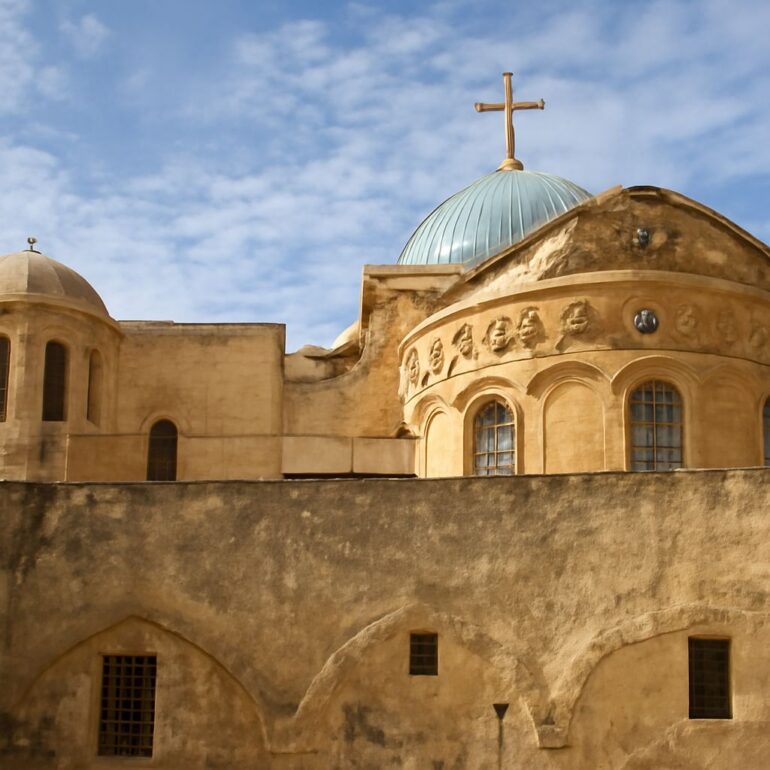
The Church of Holy Sepulchre stands at the heart of Jerusalem’s Old City, revered by millions as the site of Jesus’ crucifixion, burial, and resurrection. This ancient church is not only a place of deep spiritual meaning for Christians but also a complex historical monument that draws visitors from around the world. Understanding its origins, religious significance, and what to expect during a visit will help you make the most of your experience at the holy sepulchre.
The Origins and History of the Church of Holy Sepulchre
The story of the church of holy sepulchre begins in the 4th century AD. Roman Emperor Constantine the Great, after converting to Christianity, ordered the construction of a grand church on the site believed to be Golgotha—the hill where Jesus was crucified. His mother, Helena, is credited with helping to locate the site and overseeing the early construction.
Since its dedication in 335 AD, the church of the holy sepulchre jerusalem has seen many changes. Over the centuries, it has been damaged by fires, earthquakes, and invasions. The current structure is a patchwork of various architectural styles, the result of multiple reconstructions and additions by Byzantine, Crusader, and later rulers.
One of the most remarkable facts about the church is its shared ownership. Since the 12th century, several Christian denominations—including Greek Orthodox, Armenian Apostolic, Roman Catholic, Coptic, Ethiopian, and Syriac Orthodox—have jointly administered the church. This unique arrangement is governed by the “Status Quo,” an agreement that regulates the use and maintenance of the church’s spaces.
Despite its turbulent history, the church remains a profound symbol of faith and resilience, standing as a witness to centuries of devotion and conflict in Jerusalem.
Religious Significance of the Holy Sepulchre
The holy sepulchre is considered the most sacred site in Christianity. According to tradition, it is the exact location where Jesus was crucified (at a spot known as Calvary or Golgotha), buried, and resurrected. These events are at the core of Christian belief, making a pilgrimage to this church a deeply meaningful spiritual journey for the faithful.
The church draws visitors from all Christian traditions as well as those curious about its history and architecture. The annual Holy Fire ceremony, held every Orthodox Easter, is one of the most important and dramatic religious events at the holy sepulchre jerusalem, attracting thousands of pilgrims and media from around the world.
Today, the church of holy sepulchre continues to serve as the destination for many Christian pilgrimages. Its sacred spaces offer a powerful place for prayer, reflection, and connection to the foundational stories of Christianity.
For many, walking the Via Dolorosa (the path Jesus is believed to have taken to his crucifixion) and reaching the church’s doors is the culmination of a lifelong dream.
Key Sites Inside the Church of the Holy Sepulchre Jerusalem
The church of the holy sepulchre jerusalem is a maze of chapels, shrines, and historic sites. Some highlights include:
- Golgotha (Calvary): The upper floor marks the traditional site of Jesus’ crucifixion. Visitors can kneel at an altar beneath which lies the bedrock of Calvary.
- The Stone of Anointing: Just inside the entrance, this stone marks the spot where Jesus’ body was prepared for burial. Pilgrims often touch or kiss the stone in reverence.
- The Aedicule: At the center of the church stands the small chapel housing Jesus’ empty tomb—the focal point of pilgrimage. Both the outer chamber (the Chapel of the Angel) and the inner tomb are accessible to visitors, though there may be a long wait.
- Other Chapels: Various denominations maintain their own chapels, each with unique icons, lamps, and altars. Notable examples include the Chapel of St. Helena, the Chapel of the Finding of the Cross, and the Roman Catholic Chapel of the Nailing to the Cross.
Exploring the holy sepulchre jerusalem reveals layers of history and devotion. Each space reflects centuries of artistry, prayer, and tradition.
Allow enough time to absorb the atmosphere. The interior can be crowded, but quiet corners offer moments of reflection amid the steady flow of pilgrims.
Visiting the Church: Tips and Practical Information
The church of holy sepulchre is located in the Christian Quarter of Jerusalem’s Old City, not far from Jaffa Gate. Admission is free, and the church is open daily, though hours may vary by season or religious event.
Dress modestly out of respect for the sacred site—shoulders and knees should be covered. Large bags and photography may have restrictions, especially during services. The site can be very crowded, so consider arriving early in the morning or late in the afternoon for a quieter experience.
Be prepared for long lines to visit the Aedicule and other key sites. Guided tours are available and can enrich your understanding of the church’s history and religious importance. Allow at least an hour for your visit, though two or more hours will let you explore more fully.
Nearby, you’ll find shops, cafés, and other points of interest in the Old City, making the church of the holy sepulchre jerusalem a central part of any Jerusalem pilgrimage or historical tour.
