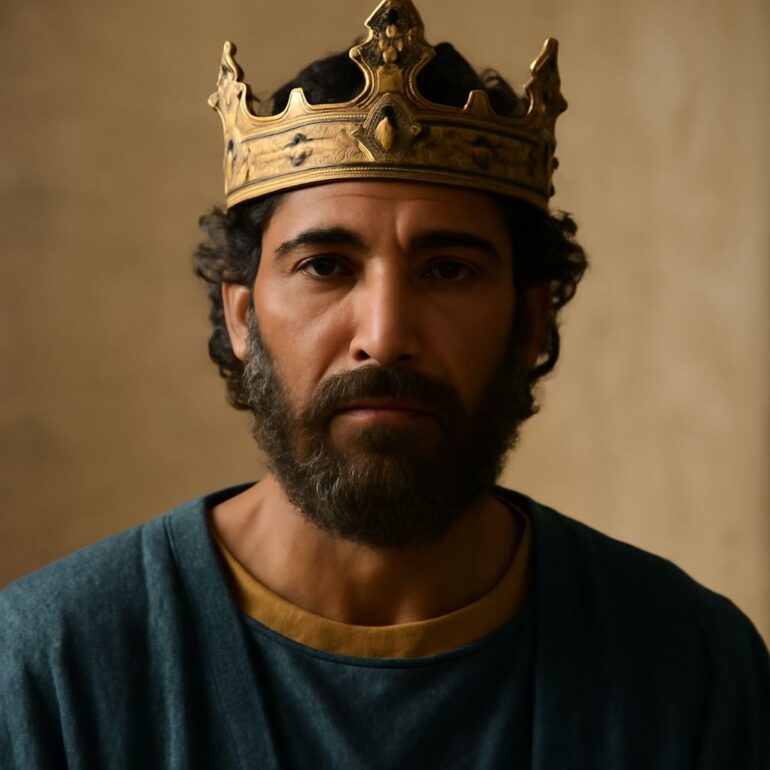
The biblical account of Israel’s king portrays a ruler known for wisdom, ambitious building, and the Temple in Jerusalem. It also presents a more troubled picture: political rivalries, labor demands, religious failures, and tensions that become central after his death.
The principal narrative appears in 1 Kings 1–11, with another account in 2 Chronicles 1–9. These works are religious histories with distinct emphases. Their stories are essential sources for the king’s literary and religious significance, while the scale and details of his historical reign remain subjects of research.
Solomon Bible passages: a guide to the story
The Solomon Bible narrative is available chapter by chapter in the United States Conference of Catholic Bishops’ edition of 1 Kings, using the New American Bible, Revised Edition. A reader can begin with the succession and follow the narrative through the king’s death:
- 1 Kings 1–2: David’s final days, the contest over succession, and the consolidation of royal power.
- 1 Kings 3–4: A request for wisdom, a famous judgment, the organization of the court, and the ruler’s reputation.
- 1 Kings 5–8: Preparations for building, the Temple and palace, and the dedication of the Temple.
- 1 Kings 9–10: Royal projects, trade, wealth, and the visit of the queen of Sheba.
- 1 Kings 11–12: The king’s religious failures, the end of his reign, and the division of the kingdom under his successor.
The parallel account in 2 Chronicles 1–9 includes wisdom and Temple building but places emphasis differently. Comparing the two books is useful because neither is simply a complete record of everything the other leaves out.
A contested succession
In 1 Kings, Solomon is a son of David and Bathsheba. David is old, and another son, Adonijah, acts to establish himself as successor. Bathsheba and the prophet Nathan approach the king; David orders Solomon’s anointing, and the new king takes the throne. The opening chapters present succession as a matter involving family, court officials, religious figures, and control of public authority.
The settlement is not free of violence. Chapter 2 describes steps against perceived rivals and opponents as the new ruler secures his position. Those episodes complicate a portrait made solely of peaceful wisdom. They also introduce an institutional question that runs throughout Kings: how power is inherited, defended, and judged.
The narrative places this reign in the period before the division into the kingdoms of Israel and Judah. Its framework is important to the story, even though historians debate how closely the biblical portrait of a united monarchy corresponds to the political structures of the tenth century BCE.
Wisdom and the judgment between two women
In 1 Kings 3, God appears to the new king in a dream. He asks for an understanding heart to govern and discern between good and evil. The response grants wisdom and also promises other benefits. The request places judgment and the needs of the people at the center of the ruler’s ideal task.
The chapter illustrates that gift through a dispute between two women who each claim a living child. The king proposes dividing the child; the true mother offers to give him up to save his life. The ruler recognizes her response and awards her the child. The story presents wisdom as discernment in a difficult case, not just the possession of many sayings.
The judgment is a narrative of royal authority as well as personal insight. A decision from the throne resolves a dispute that has no witnesses in the account. Its power lies in the way the proposed judgment exposes the competing claims, while the narrative’s praise of the ruler tells readers what it values in a judge.
The Temple and the work behind it
The Temple is central to king Solomon in the Bible. 1 Kings 5–6 describes arrangements for timber and labor, followed by the building of a sanctuary in Jerusalem. Chapter 8 describes the ark being brought in and the king’s prayer at the dedication. The Temple becomes a focal institution for worship and for the book’s account of Israel’s relationship with God.
The building story includes cooperation with Hiram of Tyre and extensive organization of materials and workers. It also mentions forced labor. The grandeur of the account should therefore be read with the human and administrative demands it records. Later, in 1 Kings 12, representatives of the people ask the successor Rehoboam to lighten the burden of labor and service; his refusal precedes the political break in the narrative.
Chronicles gives extended attention to the Temple and its worship. The USCCB introduction to the historical books notes the Chronicler’s distinctive interest in Jerusalem’s sanctuary and its arrangements. A comparison with Kings reveals how a shared figure can serve different narrative purposes.
Wealth, alliances, and the limits of royal power
The king’s fame in 1 Kings includes commerce, costly building, and the visit of the queen of Sheba, who tests his wisdom with difficult questions. These episodes depict an impressive court with international connections. The narrative’s interest is not simply economic: the queen’s visit also illustrates how the ruler’s reputation extends beyond Israel.
The assessment changes in chapter 11. The text attributes the ruler’s turn toward other gods to his relationships with foreign wives and portrays this as a breach of fidelity to the Lord. It then announces that the kingdom will be torn from his son, while preserving a portion for David’s line. The narrative frames the political division as having a religious meaning.
A reader can notice both the story’s evaluation and its treatment of women and outsiders. The text assigns them a role in explaining the king’s conduct; that ancient narrative perspective should not be converted into a general judgment about foreign people or women. The ruler remains responsible for the actions for which the book criticizes him.
Did he write the wisdom books?
Biblical tradition associates the king with wisdom literature, but association and documented authorship are not the same. Proverbs contains headings attributing collections to him, alongside other named material. The USCCB introduction describes the book as an anthology of collections and discusses its later editing.
Proverbs 25:1 itself attributes one collection to him while saying that servants of a later king, Hezekiah, copied it. That heading is evidence of a tradition of attribution and transmission. It does not demonstrate that the historical king personally composed every proverb in the finished book.
Ecclesiastes, the Song of Songs, and the Wisdom of Solomon have also been associated with his name or royal persona in different ways. Readers should check each book’s introduction and genre before turning that tradition into a claim of personal authorship. A later work can invoke a famous wise king without being a document written by him.
History, archaeology, and reading the sources
Archaeology provides evidence about buildings, settlements, and material culture in the southern Levant, but linking a particular structure directly to an individual ruler requires dating and interpretation. A 2019 scholarly overview in The Ancient Near East Today notes the limited direct evidence for reconstructing the king’s life and the debate over the dates of major building projects. The biblical account remains evidence for the history of the traditions, but it cannot independently settle every question about their historical scale.
For a first reading, follow 1 Kings in order: succession in chapters 1–2, the request and judgment in chapter 3, the Temple in chapters 5–8, and the account of the later reign in chapters 9–11. Then read chapter 12 to see how the narrative connects royal policy with division. Compare the Temple material with 2 Chronicles and consult a scholarly note before treating a literary portrait, a traditional attribution, or an archaeological proposal as the same kind of evidence.
