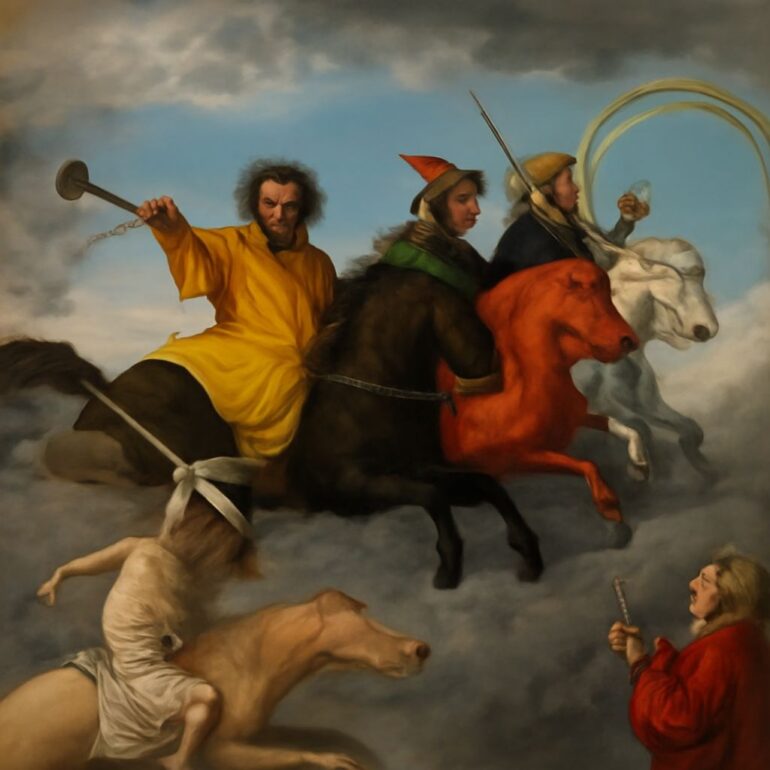
The Four Horsemen of the Apocalypse are iconic figures from the Bible’s Book of Revelation. These horsemen symbolize different forms of conquest and disaster, each riding a horse of a distinct color. Understanding what are the four horsemen involves exploring their symbolism and what each represents. This article delves into the meaning behind the 4 horsemen of the apocalypse and who they are.
Introduction to the Four Horsemen
The Four Horsemen are described in Revelation 6:1-8 and have been interpreted as omens of the end times. Each horseman represents a different aspect of human suffering and divine judgment, and their arrival signifies the unfolding of apocalyptic events. Let’s explore what are the 4 horsemen of the apocalypse in detail.
The White Horseman
The White Horseman is often associated with conquest and power. He rides a white horse and is typically portrayed with a crown and a bow. Some interpretations suggest that this horseman represents the spread of a powerful ideology or force, while others view him as a symbol of divine victory or the Antichrist.
The Red Horseman
The Red Horseman represents war and bloodshed. Riding a fiery red horse, he wields a large sword, symbolizing the potency of conflict. This horseman signifies the outbreak of wars and the resulting chaos and destruction, highlighting human suffering brought on by violence.
The Black Horseman
The Black Horseman is a symbol of famine and economic despair. Mounted on a black horse, he carries a pair of scales, representing scarcity and the inequality of resource distribution. This horseman’s arrival suggests a time of great need, where basic necessities become precious and hard to obtain.
The Pale Horseman
The Pale Horseman is associated with death and disease. He rides a pale, often described as ashen or greenish, horse and is accompanied by Hades. This horseman embodies the inevitability of death and the widespread devastation of plagues, reminding us of the fragility of life and the reality of mortality.
