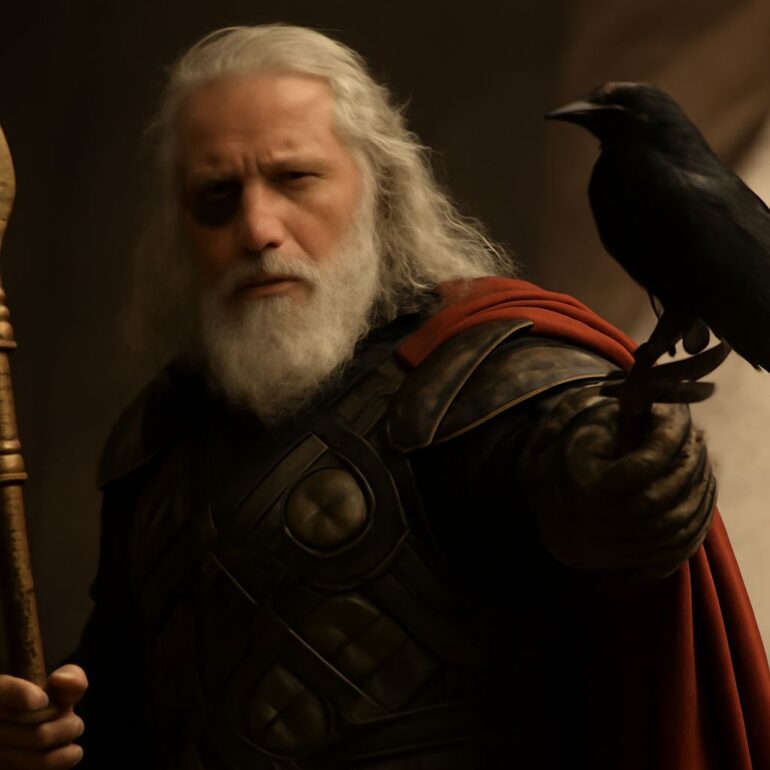
Odin, known as the chief deity in Norse mythology, is a fascinating figure with a complex and multifaceted character. Revered as a god of wisdom, poetry, and war, Odin’s stories have captivated audiences for centuries. Understanding his role and influence not only in ancient times but also in modern contexts, including a comparison with Catholic beliefs, offers a rich exploration of cultural and religious intersections.
Odin in Norse Mythology
Odin, often referred to as the “Allfather,” holds a significant place in Norse mythology. As the ruler of Asgard, he is the father of many gods, including Thor and Balder. Odin is associated with wisdom, having sacrificed an eye in his relentless pursuit of knowledge. His ravens, Huginn and Muninn, fly across the world to bring him information, symbolizing his omnipresence and intelligence.
Renowned as a god of war, Odin was also a patron of poets and kingly rulers. He is frequently depicted with his spear, Gungnir, and his eight-legged horse, Sleipnir. The myths surrounding him often highlight his cunning and strategic mind, attributes that made him a revered figure among the Vikings.
Comparing Odin and Catholic Beliefs
While Odin’s mythology is deeply rooted in Norse paganism, it presents an intriguing juxtaposition to Catholic beliefs. Unlike the monotheistic nature of Catholicism, with its singular God, Norse mythology embraces a pantheon of gods, with Odin at the helm. This polytheistic framework contrasts sharply with Catholic doctrine, which focuses on the Trinity: Father, Son, and Holy Spirit.
Moreover, the moral narratives and purposes of the deities differ. Odin’s quests for knowledge and power often lead him into morally ambiguous situations, whereas Catholic teachings emphasize a clearer moral path guided by the teachings of Jesus Christ. Despite these differences, both traditions offer rich narratives exploring the human condition and the divine.
Odin’s Influence in Modern Culture
Odin’s legacy extends far beyond the ancient sagas. In modern times, his character has been reimagined in various forms of media, from literature to films. The Marvel Cinematic Universe, for example, features Odin prominently as the father of Thor, introducing his mythos to a global audience.
Beyond entertainment, Odin’s symbolism is prevalent in modern art and literature, where themes of wisdom, sacrifice, and leadership are explored. His enduring presence in popular culture speaks to a timeless fascination with his complex character, bridging ancient beliefs with contemporary storytelling.
