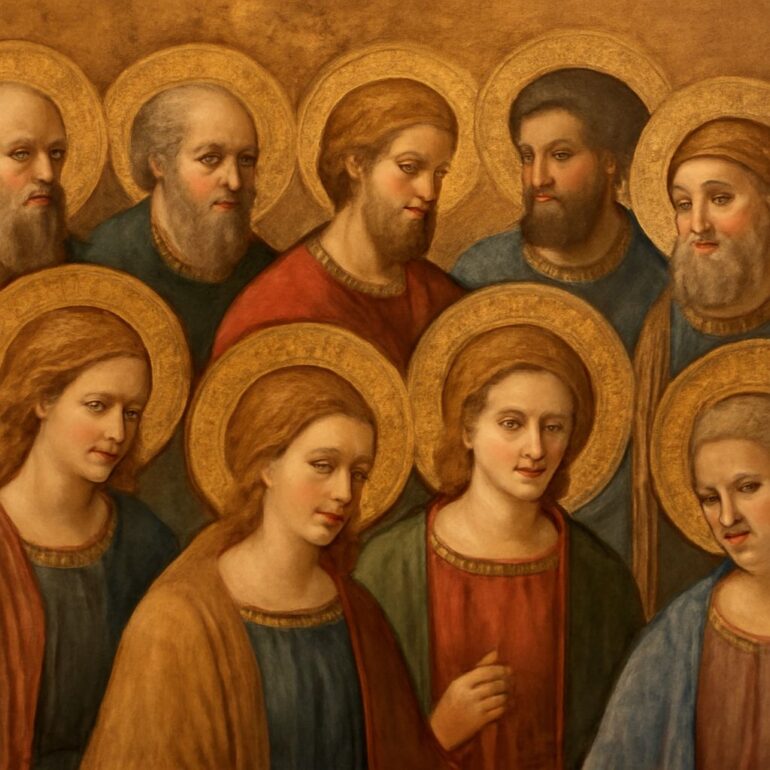
Which saint is celebrated on a particular day? For the Roman Rite in the United States, begin with the USCCB’s 2026 liturgical calendar, find the date, and read the celebration and its rank together. The calendar of Catholic saints and their feast days identifies the observance assigned to each day, but the applicable local or religious community calendar can add another celebration.
The answer also depends on the year. A saint’s feast day may coincide with a Sunday or another celebration that takes precedence. This guide uses the Roman Rite and the calendar for the dioceses of the United States for 2026; other Catholic rites and jurisdictions have their own calendars. The USCCB’s calendar index provides the annual files and their update history.
Saint Feast Days: Finding a Date in 2026
Open the 2026 PDF and go to the month and date. Each entry identifies the liturgical day and may include a saint, the rank of the observance, the liturgical color, and references to readings for Mass. For example, January 5, 2026 lists Saint John Neumann, Bishop, as a U.S. memorial. January 6 lists a Christmas weekday and places Saint André Bessette in brackets as an optional memorial for the United States.
Saint feast days are assigned ranks that affect what is celebrated. A memorial is a liturgical observance of a saint or another sacred subject; it can be obligatory or optional. At an optional memorial, the permitted choice depends on the day and season. The calendar’s abbreviations and introductory notes explain how to read its entries, so a reader should consult those notes before treating brackets or a color as a separate instruction.
A catholic calendar of saints and feast days is more than a list of birthdays. It organizes public worship alongside the seasons of Advent, Christmas, Lent, Easter, and Ordinary Time. A saints day calendar may be useful for finding a familiar name, but the annual liturgical calendar shows how that name fits into the service on the date in question.
General, National, and Local Calendars
The General Roman Calendar provides the common framework for the Roman Rite. It includes celebrations of the Lord, Mary, and saints of broad significance. A particular calendar adds observances for a place or community. The USCCB explains that its annual calendar combines the General Roman Calendar with the proper calendar for U.S. dioceses. In the PDF, “USA” identifies entries or arrangements particular to that setting.
A diocese may also honor its principal patron or the dedication of its cathedral. A parish can have a celebration connected with its own patron or church dedication. The rank and date applicable in a particular church can therefore differ from a national overview. The diocesan worship office, parish bulletin, or local ordo—an annual guide to the order of worship—can supply that local information.
Religious communities have proper calendars too. An order may celebrate its founder or other saints associated with its history on dates or at ranks specified for that community. The General Instruction of the Roman Missal addresses choices involving diocesan and religious calendars. A visitor to a monastery should ask the community which calendar governs its public liturgy rather than assuming that a national list shows every local observance.
The Roman Martyrology is a related but broader reference. It records saints and blesseds associated with dates, whereas the liturgical calendar assigns celebrations and ranks for worship. Finding a person in the martyrology does not automatically mean that person’s memorial is the principal celebration at every Mass on that date.
Solemnities, Feasts, and Memorials
The USCCB’s introduction to the liturgical year distinguishes three principal ranks: solemnity, feast, and memorial. Solemnities are the highest of these categories; feasts and memorials follow. Memorials may be obligatory or optional. These terms explain the form and priority of an observance, although the detailed table of liturgical days is needed to resolve particular coincidences.
A solemnity is not automatically a holy day of obligation in every jurisdiction. Obligation is a separate question governed by church law and the applicable local arrangements. A calendar may label a holy day of obligation, as the 2026 U.S. calendar does for January 1, the Solemnity of Mary, the Holy Mother of God. For a local obligation, consult the diocese as well as the national calendar.
Sunday has a distinctive place in the calendar. Some solemnities or feasts can take precedence over a Sunday, while many saint memorials do not. The result depends on the particular days involved, their ranks, and the rules for that season. It is therefore better to look at the actual annual entry than to assume that a familiar fixed date is celebrated in the same way every year.
What Happens When Dates Coincide?
Consider January 4, 2026. A devotional list of U.S. saints gives that date for Saint Elizabeth Ann Seton, but the 2026 U.S. liturgical calendar lists the Epiphany of the Lord, a solemnity, on that Sunday. The two sources serve different purposes: one introduces a saint and her customary date, while the other shows the liturgical celebration assigned to that day in that year. Both can be read together without assuming that the saint’s memorial governs that Sunday’s Mass. The USCCB’s saints list and annual calendar make the comparison visible.
Seasonal rules can also change how a memorial is observed. The General Instruction provides, for example, that on Lenten weekdays the Mass texts of the weekday are used, with a specified possibility of using a memorial’s Collect, or opening prayer, outside Ash Wednesday and Holy Week. That is a more precise answer than saying every saint’s observance disappears during Lent.
When two observances coincide, some may be omitted for that year, while a solemnity can be transferred according to the applicable rules. A published annual calendar ordinarily incorporates those decisions for its scope. A local proper calendar may create a further question, so the parish or diocesan ordo is the right source for the actual celebration at a particular church.
Choosing a Reliable Reference
For daily Mass readings, the USCCB’s online calendar provides date-by-date entries. The annual PDF gives a fuller overview, including ranks and notes. A catholic calendar of saints and feast days for a particular year makes the relationship between fixed dates and moving celebrations visible. A roman catholic saint of the day calendar on another website may be useful for devotional reading, but its date, jurisdiction, and editorial method should be checked before using it to determine the liturgy.
For example, November 13, 2026 is listed in the U.S. calendar as the memorial of Saint Frances Xavier Cabrini. The online readings calendar identifies the same U.S. observance. Comparing the two sources shows how an annual entry and a daily page can support one another; the applicable local calendar remains relevant if a church has its own celebration.
To check any saint’s feast days, select the rite, country, year, and local community first. Find the date in that calendar, read its rank and notes, then check the parish or diocesan ordo for a local addition or a coinciding celebration. That sequence turns a name and date into an answer about the worship actually being planned.
