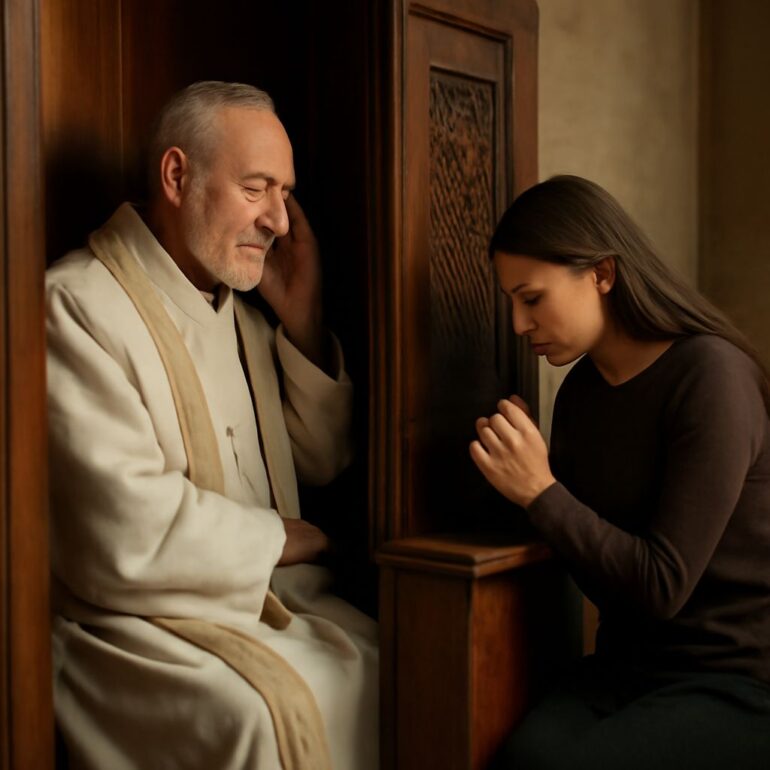
The Sacrament of Reconciliation steps are straightforward: examine your conscience, confess your sins, express sorrow, receive absolution, and complete your penance. You do not need to memorize one exact script. Speak honestly and follow the priest’s guidance.
If this is your first Confession or you are returning after a long time, tell the priest. He can guide you through each part and answer questions without judgment.
How to Prepare for Reconciliation
- Examine your conscience. Pray quietly and review your choices since your last Confession. Consider how you have failed to love God and other people through thoughts, words, actions, or neglected responsibilities.
- Be sorry for your sins. Ask God for sincere contrition, which means turning away from sin and turning back to God. Resolve to avoid sin and its near occasions with God’s help.
- Plan to confess clearly. Recall serious sins by kind and number as best you can. Do not write a speech or include unnecessary details. If you are unsure whether something is a sin or how to describe it, ask the priest.
Before entering, decide whether you will confess behind a screen or face-to-face, if both options are available. Begin with the Sign of the Cross when the priest invites you to start.
What to Say in Confession
After greeting the priest, you can say: “Bless me, Father, for I have sinned. It has been [length of time] since my last Confession.” If this is your first Confession, say, “This is my first Confession.” If you do not remember the date, simply say so.
Then confess your sins in your own words. A useful beginning is: “Since my last Confession, I have sinned by…” Name each serious sin honestly, including its kind and approximate number when you can. You may also confess lesser sins that you want to bring to God for healing.
The priest may ask a brief question or offer advice. Listen carefully, and answer honestly. He may then assign a penance, such as a prayer, Scripture reading, or act of charity.
Confessing Sins, Counsel, and an Act of Contrition
Do not hide a serious sin or deliberately leave it out. At the same time, Confession is not a detailed retelling of every event. If you forget a sin unintentionally, mention it at your next Confession; if you remember it during the conversation, simply add it.
After the priest’s counsel and penance, he may invite you to make an Act of Contrition. You can use a memorized prayer or express sincere sorrow in your own words. For example:
“My God, I am sorry for my sins with all my heart. I firmly intend, with your help, to sin no more and to avoid whatever leads me to sin. Amen.”
The wording is flexible, but your sorrow and intention to turn from sin should be sincere. If you do not know what to say, ask the priest for help. The priest—not the penitent—assigns the penance and gives sacramental absolution.
Absolution and Completing Your Penance
After your Act of Contrition, listen as the priest extends his hand or makes the Sign of the Cross and says the prayer of absolution. This is the sacramental action that reconciles you to God; you do not say the absolution yourself.
At the end of the absolution, respond, “Amen.” The priest may then dismiss you with words such as “Go in peace.” You can respond, “Thanks be to God.” The exact dismissal may vary, but the meaning remains the same.
Leave quietly and complete your penance as soon as reasonably possible, preferably before leaving the church. Pray the assigned prayer or perform the assigned action attentively, offering it as part of your restored relationship with God.
