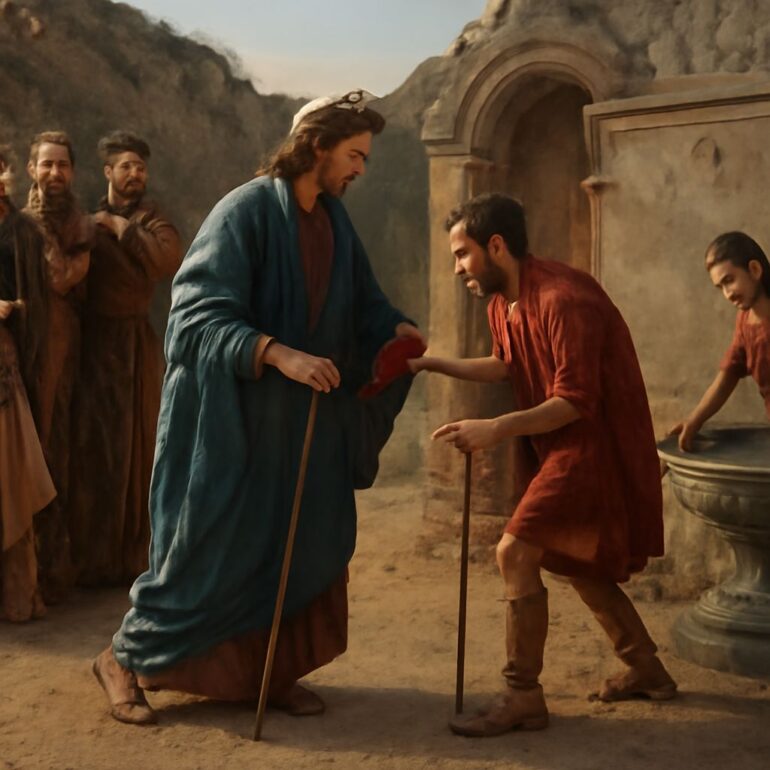
In John 9, we encounter a profound story where Jesus heals a man born blind. This miracle, found in John 9:1-41, not only demonstrates Jesus’ divine power but also addresses deeper theological questions about sin and suffering. As Jesus and His disciples come across the blind man, they ask, “Who sinned that this man was born blind?” This question sets the stage for a deeper understanding of faith and human suffering.
The Miracle of Jesus Healing the Blind Man
The story begins with Jesus and His disciples encountering a man who had been blind from birth. In a remarkable display of compassion and divine authority, Jesus heals him. Using mud made from dirt and saliva, Jesus applies it to the man’s eyes and instructs him to wash in the Pool of Siloam. Upon doing so, the man miraculously gains his sight.
This healing act is more than just a physical restoration; it symbolizes spiritual awakening and insight. It showcases Jesus’ power and serves as a testament to His identity as the Light of the World. This miracle prompts various reactions from those who witness it, sparking both belief and skepticism.
Exploring John 9:1-41
The narrative of John 9:1-41 unfolds with intricate details. After the healing, the man faces the scrutiny of the Pharisees. They question the legitimacy of the miracle and Jesus’ authority. Despite pressure, the man who was healed stands firm, asserting the truth of Jesus’ miracle. This account illustrates the growing tension between Jesus and the religious leaders of the time.
Each character in the story plays a significant role, from the disciples to the Pharisees, and even the man’s parents. Their reactions range from disbelief to fear, highlighting the societal and spiritual implications of Jesus’ actions. The story progresses with the once-blind man not only receiving physical sight but also experiencing spiritual enlightenment, leading him to recognize Jesus as the Messiah.
The Question of Sin and Suffering
The disciples’ question, “Who sinned that this man was born blind?” reflects a common belief of the time that physical ailments were a direct result of sin. Jesus, however, challenges this notion. He clarifies that the man’s blindness was not due to sin, but so “the works of God might be displayed in him.”
This explanation shifts the perspective from blame to purpose. It invites a broader understanding of suffering, emphasizing that challenges can serve higher purposes in God’s plan. Jesus’ response suggests that suffering is not always a punishment, but can be an opportunity for divine work and revelation.
The story of Jesus healing the blind man in John 9 continues to inspire and challenge readers to see beyond physical limitations and to seek deeper spiritual truths. It calls for reflection on the nature of faith, the purpose of suffering, and the transformative power of Jesus’ miracles.
