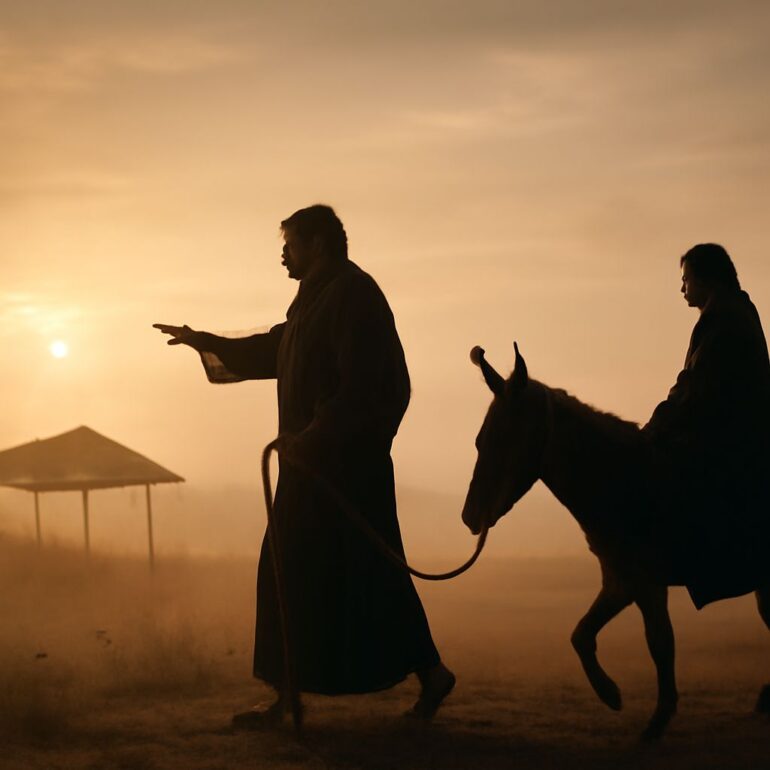
What is the Christmas novena associated with Saint Andrew? It is a short prayer recalling the birth of Jesus and asking God to hear a personal intention. A common custom is to say it fifteen times a day from Andrew’s feast on November 30 through Christmas Eve.
The devotion named for St. Andrew begins on his feast, but its words are addressed to God rather than to the apostle. Also called the Christmas Anticipation Prayer, it is a seasonal private devotion with a distinctive schedule and wording.
St Andrews Novena: The Prayer and Its Timing
EWTN publishes the complete Christmas Anticipation Prayer, beginning “Hail and blessed be the hour and moment.” It recalls the birth of the Son of God to the Virgin Mary in Bethlehem, then asks God to hear the speaker’s request through the merits of Jesus Christ and his mother. The printed text marks a place for the person praying to mention an intention.
EWTN describes the custom as beginning on November 30 and continuing until Christmas, with fifteen recitations each day. St. Catherine of Siena Catholic Church specifies Christmas Eve as the end of its 25-day practice. Those following a parish booklet can use the ending date given there; EWTN’s “until Christmas” and the parish’s explicit December 24 describe closely related ways of setting the period.
The St Andrew novena takes its familiar name from the feast on which the custom begins. Andrew was one of Jesus’ apostles, and the Church commemorates him on November 30. The Christmas prayer does not name him in its text or claim that he composed it. Its title identifies the day that opens the practice, while the prayer itself looks ahead to the Nativity, the birth of Jesus.
The St Andrews novena is often printed on a card or parish sheet. The wording can vary slightly across versions, so the opening line and the Christmas setting are helpful identifying marks. A reader who wants the form described here can follow the linked EWTN text rather than relying on the title alone.
Why a 25-Day Devotion Is Called a Novena
A novena is commonly a period of prayer extending over nine days. The word is connected with nine, and many novenas follow a daily sequence with a particular intention. This Christmas custom is unusual in length: November 30 through December 24 inclusive is 25 days. Its established name does not mean that the published schedule should be shortened to nine days.
Andrew’s Christmas novena also repeats the same short text rather than assigning a different reading or petition to each day. Fifteen repetitions can be said together or divided into smaller groups during the day. For example, five in the morning, five at midday, and five in the evening total fifteen. The division is a practical way to keep count, not an additional requirement of the prayer.
Someone praying alone can keep the text on a card or phone and use a small counter, marks on paper, or beads to track the repetitions. A household or parish group can decide on a shared time and follow the leader. The essential feature of the custom described by the sources is the repeated prayer during the days leading to Christmas; its manner of counting is a matter of convenience.
A personal intention is the request brought to the prayer. It may be stated in words at the point marked in the EWTN text or held in mind. The prayer asks God to hear and grant the request; a fixed number of repetitions is not a guarantee of a particular outcome. Its devotional purpose includes sustained attention to the birth of Christ as well as petition.
Understanding the Words
The opening praises the hour and moment of Jesus’ birth. “Hail” is a greeting or expression of honor in this setting. The text names Mary, Bethlehem, midnight, and cold in a compact meditation on the Nativity. These details give the prayer a vivid scene in which to place its request.
The prayer’s images should be read as devotional language. The Gospel of Luke 2 places the birth in Bethlehem and describes shepherds keeping watch at night. The familiar prayer adds its own phrasing about midnight and cold; those details should not be treated as a precise record established by Luke’s account. The distinction leaves room to understand both the Gospel and the prayer on their own terms.
“Vouchsafe” is an older English word meaning to grant or bestow. “I beseech Thee” means “I ask you earnestly.” The request through the merits of Jesus Christ and his blessed mother belongs to the wording printed by EWTN. A reader encountering another form may find more contemporary language or a different closing; comparing the full text shows whether it serves the same Christmas devotion.
The origin and authorship of this particular text should be distinguished from the apostle’s feast. The sources above establish how the prayer is presented and used today, but do not identify Andrew as its author. The saint’s name in the title is explained by the starting date, not by an attribution of composition.
Andrew’s Feast and Advent
November 30 is a fixed feast date. Advent, the season of preparation for Christmas in the Church’s calendar, begins on a Sunday whose date changes from year to year. The devotion may therefore begin shortly before Advent or within its opening days, depending on the calendar. Its own starting date remains the feast of the apostle.
The seasonal setting gives the Christmas novena named for Andrew a focus on expectation. It looks toward the celebration of Christ’s birth, while an intention gives the person praying a particular concern to carry through the period. The practice can be used privately or with others and is distinct from the Church’s public liturgy, such as Mass and the Liturgy of the Hours.
A Saint Andrew novena may also refer to a different series of prayers asking the apostle to intercede. Intercession means asking a saint to pray to God for a person or intention. In such a text Andrew is directly addressed; in the Christmas Anticipation Prayer, the address is to God. The distinction is visible in the words, not merely in the title of the card.
Similarly, a St Andrew prayer might be a petition to the apostle or a prayer for his feast. The Christmas prayer associated with Saint Andrew begins by honoring the hour of Jesus’ birth and does not ask Andrew for anything. A reader who intends a prayer to the saint should check the addressee before adopting the Christmas form.
A Compact Guide to the Custom
- Text: Use the EWTN Christmas Anticipation Prayer, beginning “Hail and blessed be the hour and moment.”
- Start: November 30, the feast of Saint Andrew.
- Daily pattern: Say the prayer fifteen times; the repetitions may be grouped across the day.
- Intention: Bring a request at the place indicated in the text or hold it in mind.
- Finish: A common practice concludes on December 24; follow the wording of the parish or guide being used.
- Identification: This is a Christmas prayer addressed to God, distinct from a direct request for Andrew’s intercession.
The St Andrew novena is a voluntary practice. Its fixed dates and repeated words provide a framework for preparing for Christmas, while the prayer’s content keeps the Nativity and the person’s intention in view.
