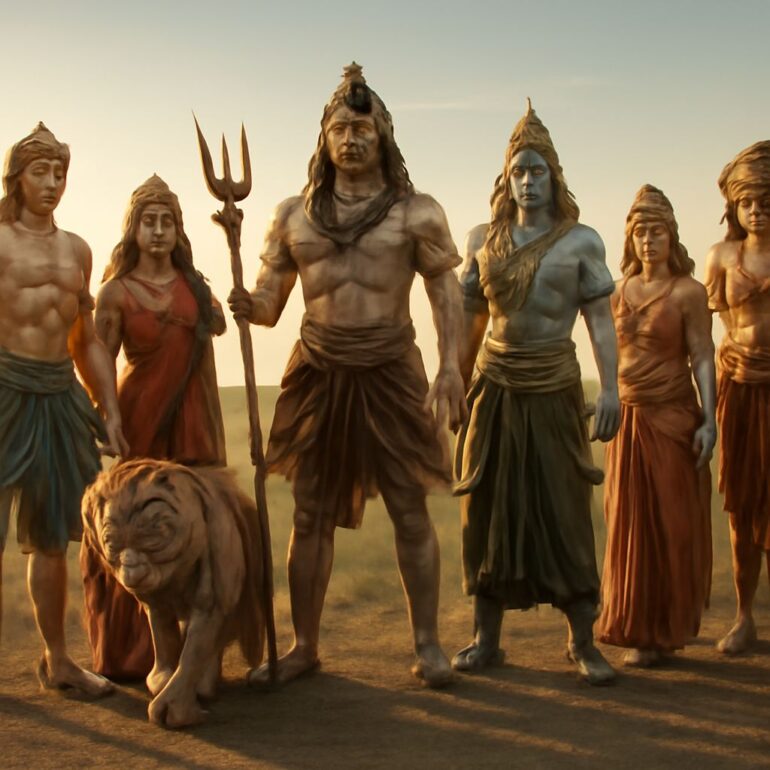
Hinduism is known for its vast and intricate pantheon, with countless deities representing different aspects of life, nature, and the universe. The diversity and depth of Hindu gods reflect the religion’s long history and the unique spiritual needs of its followers across India. This article addresses how many Hindu gods are there, introduces the most important deities, and explains the structure and relevance of the Hindu pantheon.
How Many Hindu Gods Are There?
The question of how many Hindu gods are there does not have a single, fixed answer. Traditional scriptures and cultural interpretations offer different numbers, making the total both fascinating and complex. Some ancient texts say there are 33 gods, while others suggest 330 million (33 crore) Hinduism gods. The larger number is often understood symbolically, expressing the infinite nature of the divine rather than a literal count.
In practice, most Hindus worship a handful of major deities, and each region or family might have its own favored gods or goddesses. Local traditions and festivals may honor hundreds of lesser-known deities, but the core of Hindu practice centers around a small group of central figures. This flexibility is part of what gives Hinduism its rich and adaptive character.
Despite the popular belief in millions of india gods, the religion teaches that all these deities are different forms or manifestations of one ultimate reality, called Brahman. Each god or goddess is a way for devotees to connect with the divine in a personal and meaningful way.
So, the number of Hindu gods depends both on scriptural tradition and on the personal devotion of worshippers. The answer can range from dozens to millions, but the key point is that Hinduism embraces diversity in how the divine is imagined and approached.
The Major Deities of Hinduism
While the hindu pantheon includes a vast array of gods and goddesses, several deities are especially central to Hindu worship and philosophy. These are often recognized across India, regardless of linguistic or regional differences.
Brahma is the creator god, responsible for bringing the universe into being. Despite this important role, Brahma is rarely the focus of popular worship today.
Vishnu is the preserver, known for sustaining the universe and appearing on earth in various incarnations, or avatars. His most famous incarnations include Rama and Krishna, both beloved throughout India.
Shiva is the destroyer or transformer, representing both the end of cycles and the promise of renewal. Shiva is worshipped in countless forms, from the serene yogi to the fierce Nataraja, lord of the dance.
Devi, also known simply as the Goddess, is worshipped in many forms such as Durga, Kali, Parvati, and Lakshmi. She embodies creative energy and power, and is especially important in many regions and sects.
Other important gods include Ganesha, remover of obstacles; Hanuman, the monkey god known for strength and devotion; and Saraswati, goddess of wisdom and arts. Together, these major deities reflect the many ways Hinduism addresses life’s challenges and aspirations.
The Hindu Pantheon Explained
The hindu pantheon refers to the complete set of gods and goddesses recognized by the religion. Unlike in many traditions, the pantheon is not a fixed list but a living collection shaped by centuries of stories, rituals, and cultural exchange. It is organized in complex ways, often reflecting the layers of Hindu philosophy and mythology.
Many deities are connected through family ties, consorts, or shared characteristics. For example, Shiva and Parvati are seen as a divine couple, while their sons Ganesha and Kartikeya each have their own followings. Groups of gods, such as the Devas (gods of the heavens) and Asuras (powerful beings often in opposition to the gods), help tell stories about the struggle between good and evil.
There are also local and regional deities who may not be well-known outside their communities but are deeply important to local traditions. This structure allows for both unity and incredible variety within Hindu worship.
Thus, the hindu pantheon is best understood as an evolving network of divine figures, each with a specific story, personality, and role, but all seen as reflections of the same ultimate reality.
Hindu Gods and Their Role in Indian Society
Hindu gods are central to daily life and culture in India. Temples dedicated to different deities are found in nearly every town and village, acting as both religious centers and social gathering places. Festivals honoring various gods—such as Diwali for Lakshmi, Holi for Krishna, and Mahashivaratri for Shiva—bring communities together and mark the calendar year.
The choice of which gods to worship can depend on region, family tradition, or personal need. For example, students may pray to Saraswati for success in studies, while business owners seek blessings from Ganesha before starting new projects. This practical approach helps people connect their spiritual life with their daily concerns.
In Indian society, stories of the gods are told through epic poems, theater, songs, and art. These stories not only teach religious values but also shape social norms and cultural identity. The diversity of india gods reflects the diversity of the country itself, offering a spiritual framework that adapts to different times and communities.
In summary, Hinduism’s gods are woven into the fabric of Indian life, offering guidance, inspiration, and a sense of connection to something greater than the individual or community.
