To understand what does it mean to be Catholic, start with a relationship with Jesus Christ lived within the Catholic Church. Catholic identity includes faith, worship, prayer, moral choices, and service—not simply a label or attendance at religious events.
Catholics share the Church’s faith through Scripture, apostolic Tradition, and its teaching. They grow in that faith through communal worship, personal prayer, the sacraments, ethical living, and care for neighbors, especially people who are poor or vulnerable.
What Does It Mean to Be Catholic? Faith, Church, and Daily Life
Being Catholic means believing in the one God revealed as Father, Son, and Holy Spirit, and trusting in Jesus Christ as Savior and Lord. Catholics believe Christ established the Church and continues to guide it through the Holy Spirit.
Communion with the Church is therefore central. Catholics belong to a worldwide community united in faith, worship, and service, with bishops and priests serving alongside all baptized members. This belonging includes listening to Scripture, receiving the Church’s teaching, and taking part in its prayer.
Catholic life also involves daily conversion. Catholics seek to follow Jesus’ command to love God and neighbor by practicing honesty, forgiveness, compassion, justice, and responsibility. Prayer may include private reflection, the rosary, reading the Bible, or shared prayers at home and in the parish.
What Is a Catholic Mass? Word and Eucharist
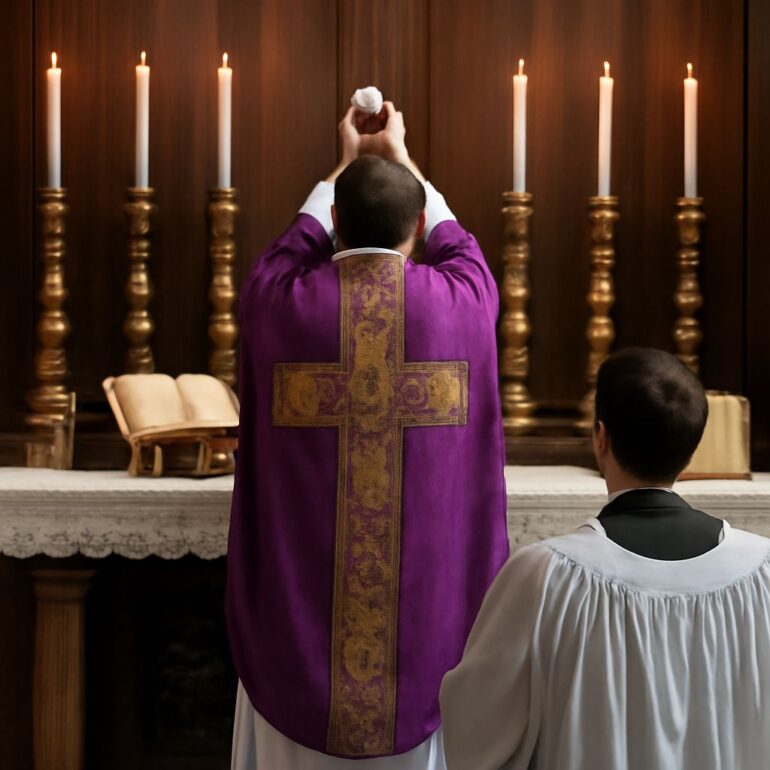
When people ask, “what is a Catholic Mass?” they are asking about the Church’s central act of communal worship. The Mass is not only a sermon service. It brings Catholics together to hear God’s Word, give thanks, pray for the world, and celebrate the Eucharist.
The Mass has two main parts:
- Liturgy of the Word: Readings from the Old and New Testaments, a psalm, the Gospel, a homily, the profession of faith, and prayers of intercession help the congregation hear and respond to God’s Word.
- Liturgy of the Eucharist: Bread and wine are presented, and the priest leads the Eucharistic Prayer. Catholics believe that, through Christ’s action, the bread and wine become his Body and Blood. The faithful then receive Holy Communion when properly prepared.
Introductory and concluding rites surround these two central parts. The congregation gathers, is sent forth, and is called to carry the Gospel into ordinary life.
What Is a Catholic Sacrament? Seven Signs of Grace
To ask “what is a Catholic sacrament?” is to ask how Catholics understand certain actions of the Church. A sacrament is an efficacious sign of grace, instituted by Christ and entrusted to the Church. Through visible words and actions, God gives spiritual grace to believers.
The Catholic Church recognizes seven sacraments:
- Baptism: Gives new life in Christ, frees a person from sin, and begins membership in the Church.
- Confirmation: Strengthens baptismal grace and deepens a person’s bond with the Holy Spirit and the Church.
- Eucharist: Makes Christ present sacramentally and nourishes Catholics with his life.
- Penance, or Reconciliation: Offers forgiveness of sins and restores communion with God and the Church.
- Anointing of the Sick: Brings Christ’s comfort, strength, and healing to people facing serious illness or weakness.
- Holy Orders: Ordains bishops, priests, and deacons for service, teaching, and leadership in the Church.
- Matrimony: Joins a baptized man and woman in a lifelong covenant of faithful love and family life.
How Mass and the Sacraments Shape Catholic Life
The sacraments mark and strengthen important stages of Christian life. Baptism, Confirmation, and Eucharist are called the sacraments of initiation; Penance and Anointing of the Sick bring healing; Holy Orders and Matrimony serve the communion and mission of the Church.
Mass and the sacraments are related but not interchangeable. The Eucharist is one of the seven sacraments, while the Mass is the full communal liturgy in which Catholics hear Scripture and celebrate the Eucharist. Together, they form a pattern of life centered on Christ, sustained by grace, and expressed through prayer, moral action, and service.
