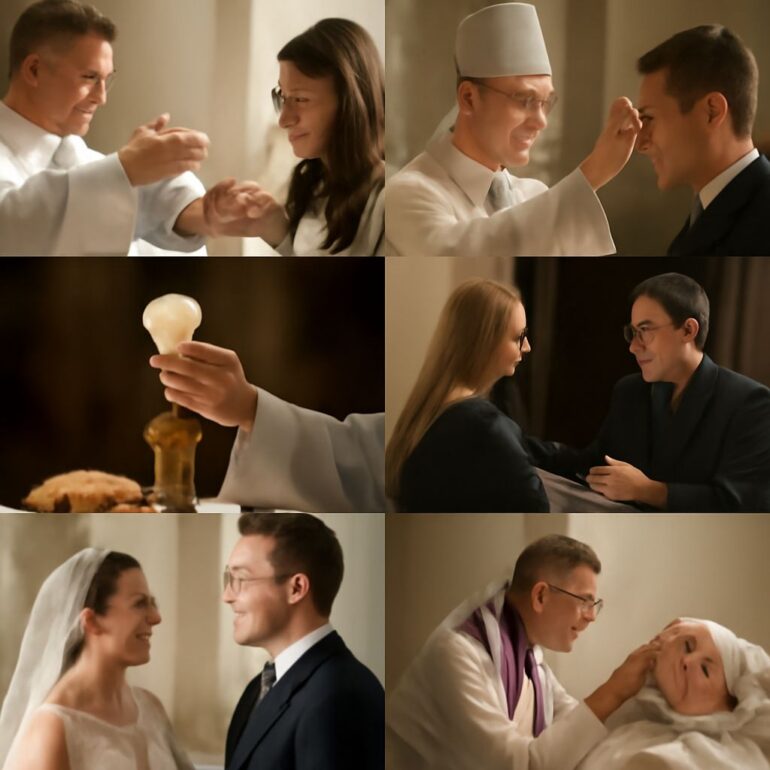
Catholic Baptism requirements include the essential use of water and the Trinitarian baptismal formula, along with preparation that differs for infants, children, and adults. Parishes may also request forms, meetings, and records before scheduling the celebration.
Baptism is the first sacrament of Christian initiation. Confirmation and the Eucharist complete this group, although the timing and preparation for each sacrament vary by age, parish, diocese, and Catholic rite.
Catholic Baptism Requirements for Children and Adults
For an infant or young child, parents normally contact their parish, provide the child’s birth information, attend a preparation session, and express their intention to raise the child in the Catholic faith. The parish may ask for proof of the parents’ sacraments or marriage, but these administrative rules are not the sacrament itself.
During the rite, a minister pours or immerses the candidate in water while saying, “I baptize you in the name of the Father, and of the Son, and of the Holy Spirit.” The parents and godparents answer questions or make promises on the child’s behalf, including a commitment to support the child’s Christian life.
Older children generally receive age-appropriate instruction before Baptism. They may take part in the profession of faith and answer some of the questions themselves, depending on their maturity and the parish’s practice.
Adults usually prepare through the Rite of Christian Initiation of Adults, or the corresponding process used by their parish or rite. This formation includes learning Catholic beliefs, turning away from sin, professing faith, and freely requesting Baptism. An adult who has already been validly baptized in another Christian tradition is not normally baptized again.
Godparents, Promises, and Baptismal Records
A godparent, also called a sponsor, supports the baptized person’s faith throughout life. For an infant, the godparent joins the parents in promising to help provide Catholic formation; for an adult, the sponsor offers personal guidance during preparation and after Baptism.
Church law commonly calls for at least one Catholic godparent who is baptized, confirmed, and has received the Eucharist, and who lives in a way consistent with the faith. The person is usually at least 16 years old. Local parishes may request proof of eligibility. A baptized non-Catholic Christian may sometimes serve as a Christian witness alongside a Catholic godparent.
The parish records the Baptism in its sacramental register and normally provides a certificate. This record may later be requested for Confirmation, marriage, or other church purposes, so families should keep the certificate and notify the parish of significant corrections.
The Seven Catholic Sacraments and Christian Initiation
The seven Catholic sacraments are:
- Baptism, which begins a person’s sacramental life and incorporates the person into the Church.
- Confirmation, which strengthens baptismal grace through the Holy Spirit.
- Eucharist, in which Catholics receive Christ in Holy Communion.
- Reconciliation, also called Penance or Confession.
- Anointing of the Sick.
- Matrimony.
- Holy Orders.
Baptism, Confirmation, and Eucharist are the three sacraments of initiation. In the Latin Church, they are often received at different ages; in some Eastern Catholic churches, Baptism, Chrismation, and Eucharist may be celebrated together, including for infants.
How Catholic Confirmation Names Work
Catholic Confirmation names usually refer to the custom of choosing a saint’s name for Confirmation. The candidate may select a saint whose virtues, life, or example offers inspiration, or whose prayers can serve as spiritual support. Some people choose the saint’s name they received at Baptism instead.
Choosing a Confirmation name is a devotional custom, not a universal sacramental requirement. A parish or diocese may invite candidates to choose one, while another may use the person’s baptismal name without any additional selection. Practices can also differ between the Latin and Eastern Catholic rites.
Whether a new name is used or not, Confirmation centers on receiving the Holy Spirit and accepting a deeper responsibility to live and witness as a Christian.
