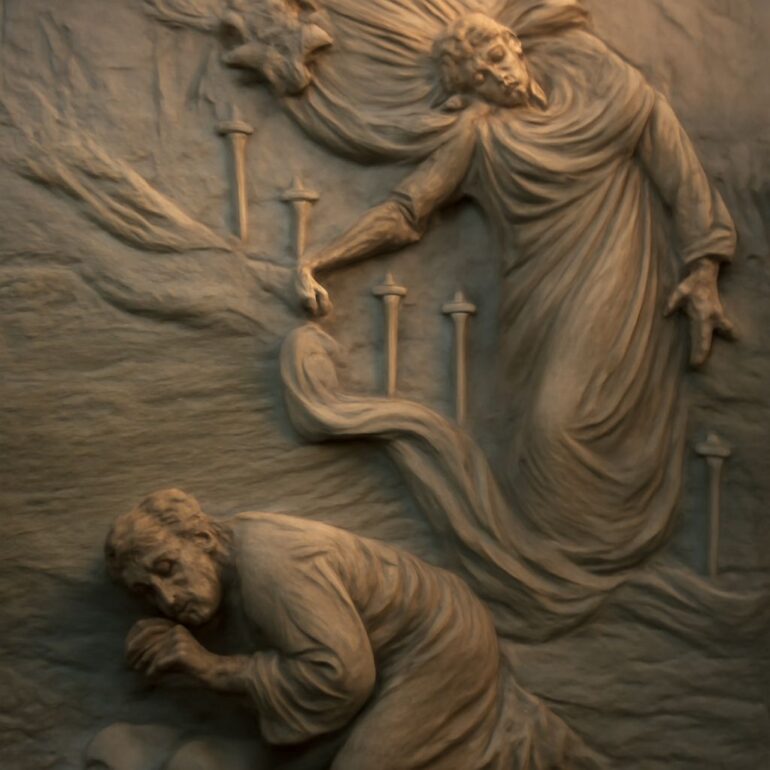
Revelation 1 begins one of the Bible’s most mysterious and debated books. The first chapter introduces the author, sets the scene, and reveals a powerful vision that shapes the rest of the text. To understand the message of Revelation, it’s essential to grasp the significance of its opening chapter, the main ideas behind the book, and its overall structure.
Overview of Revelation 1
Revelation 1 acts as the introduction to the entire book of Revelation. Often called “Rev 1” in study guides, this chapter identifies the author as John, traditionally understood to be John the Apostle. He writes from the island of Patmos, where he’s in exile for his faith.
This opening chapter describes how John receives the revelation “from Jesus Christ, which God gave him.” He’s told to write down what he sees and send it to seven churches in Asia Minor. The chapter includes a vivid vision of Jesus Christ: John sees Him dressed in a long robe with a golden sash, His hair white as wool, eyes like blazing fire, and feet like burnished bronze. The image is intended to show Jesus’ authority, divinity, and presence among His followers.
Revelation 1 sets the tone for the rest of the book. It makes clear that what follows is a message from God, delivered through Jesus and His angel to John for the benefit of believers. The chapter ends with Jesus instructing John to write “what you have seen, what is now, and what will take place later.”
What Is the Book of Revelation About?
The question “what is the book of Revelation about?” is answered directly in its first chapter. Revelation is a prophetic and symbolic book focused on “things which must soon take place.” It’s designed to show God’s ultimate plan for history, the triumph of Christ, and the final judgment of evil.
The book addresses both the struggles and hopes of the early Christian church. It uses vivid imagery, symbols, and visions to encourage believers facing persecution and hardship. The primary audience was the seven churches of Asia Minor, but its message is intended for all Christians.
At its core, Revelation is about the victory of Jesus Christ. It reveals His authority over history, assures believers of God’s control even in chaotic times, and promises the ultimate defeat of evil. Many interpret its prophecies as relating to the end times, Christ’s return, and the establishment of a new heaven and earth.
Despite its difficult language and symbols, the book’s main themes remain consistent: hope, perseverance, and faithfulness to God in the face of trials.
Key Themes in Revelation 1
Revelation 1 introduces several themes that resonate throughout the entire book. The first is the idea of revelation itself—a disclosure from God about things that are hidden or yet to come. This emphasis is clear in the opening verse and frames everything that follows.
Another important theme is the sovereignty and majesty of Jesus Christ. In Rev 1, John’s vision highlights Christ’s divine attributes and His central role in God’s plan. He’s called the “Alpha and the Omega,” meaning the beginning and the end, which underscores His eternal nature.
The chapter also stresses the idea of witness and testimony. John is commanded to write down what he sees as a testimony to the churches. This highlights the importance of faithful witness, even when times are difficult.
Finally, Revelation 1 introduces the concept of Jesus walking among the lampstands, which represent the churches. This assures believers that Christ is present with His people, watching over them, and holding their leaders in His hand.
How Many Chapters Are in Revelation?
The book of Revelation contains 22 chapters. This makes it one of the longer books in the New Testament, although not the longest overall. Each chapter builds on the foundation set in Revelation 1, introducing new visions, messages, and prophecies as the narrative unfolds.
The chapters include letters to the seven churches (chapters 2–3), vivid apocalyptic imagery (chapters 4–16), and depictions of God’s final judgment and the creation of a new heaven and earth (chapters 17–22). Knowing how many chapters are in Revelation helps readers navigate its complex structure and understand where key events fit within the overall message.
Whether you’re reading for personal study or deeper theological insight, recognizing that Revelation is structured into 22 chapters allows for a more systematic approach. It makes it easier to track major themes and the progression from John’s introduction in Rev 1 to the book’s climactic conclusion.
