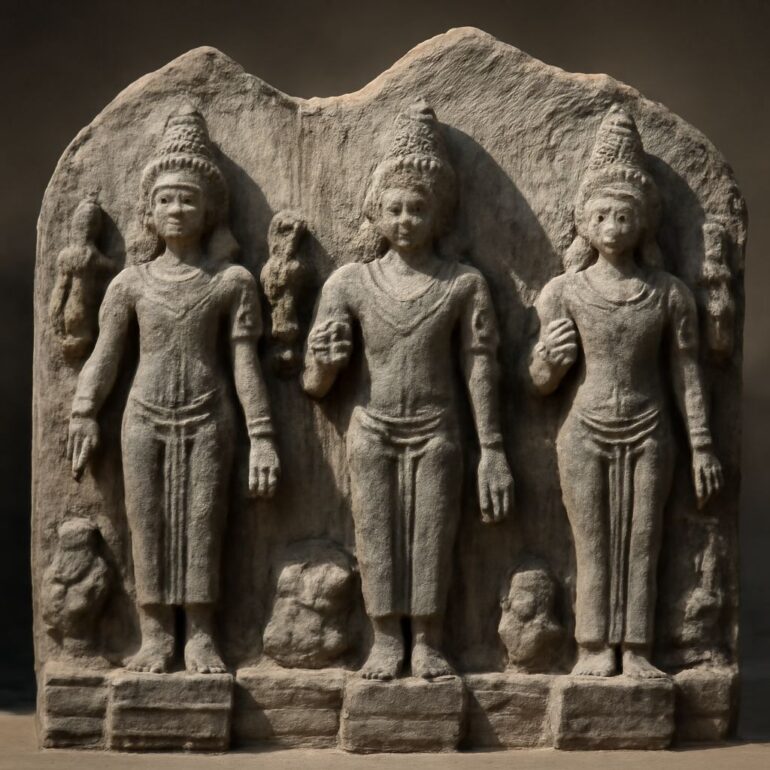
Shiva, often known as “Shiva the Destroyer,” holds a complex and integral role in Hinduism. As one of the principal deities, Shiva represents a wide range of concepts and functions within the spiritual framework of Hindu beliefs. He is revered not only for his destructive powers but also for his role in creation and preservation.
The Role of Shiva
In Hinduism, Shiva is one of the trinity, or Trimurti, alongside Brahma and Vishnu. While Brahma is the creator and Vishnu the preserver, Shiva’s role as the destroyer is essential for the cycle of the universe. This destruction is not negative; it is a necessary step that leads to rebirth and renewal. By ending what is old or unnecessary, Shiva makes way for positive transformation and growth.
Shiva’s destruction can also be internal and spiritual. He helps devotees destroy their own illusions and ego, guiding them towards enlightenment. This transformative aspect is why many see him as both a fierce warrior and a compassionate guide.
Symbolism of Shiva
Shiva is depicted with various symbols that highlight his powers and attributes. The third eye on his forehead symbolizes his ability to see beyond the ordinary and destroy evil. The serpent around his neck represents control over fear and death. His dreadlocked hair holds the sacred river Ganga, symbolizing purity and the ability to purify the soul.
The trident, or trishula, held by Shiva represents the three functions of creation, maintenance, and destruction. Additionally, the crescent moon on his head signifies the passing of time and the cyclical nature of the universe. These symbols combine to portray Shiva as a god who maintains balance in the world.
Shiva in Hindu Belief
Shiva’s significance in Hinduism extends to various aspects of life and worship. He is worshipped across diverse sects, often in the form of a linga, which symbolizes his infinite nature. Devotees celebrate numerous festivals in his honor, such as Maha Shivaratri, which marks a night of devotion and spiritual growth.
Many stories and legends in Hindu texts highlight Shiva’s role in teaching important life lessons. For instance, the story of the churning of the ocean, where Shiva drinks poison to save the world, underscores his protective and selfless nature.
Shiva’s consort, Parvati, and their children, Ganesha and Kartikeya, also play vital roles in the pantheon of Hindu gods. Together, they embody the ideal family and complement Shiva’s powers, showing his more nurturing and loving side.
Through these multifaceted roles, Shiva the Destroyer is a cornerstone of spiritual thought and practice in Hinduism, embodying the dynamic balance of life.
