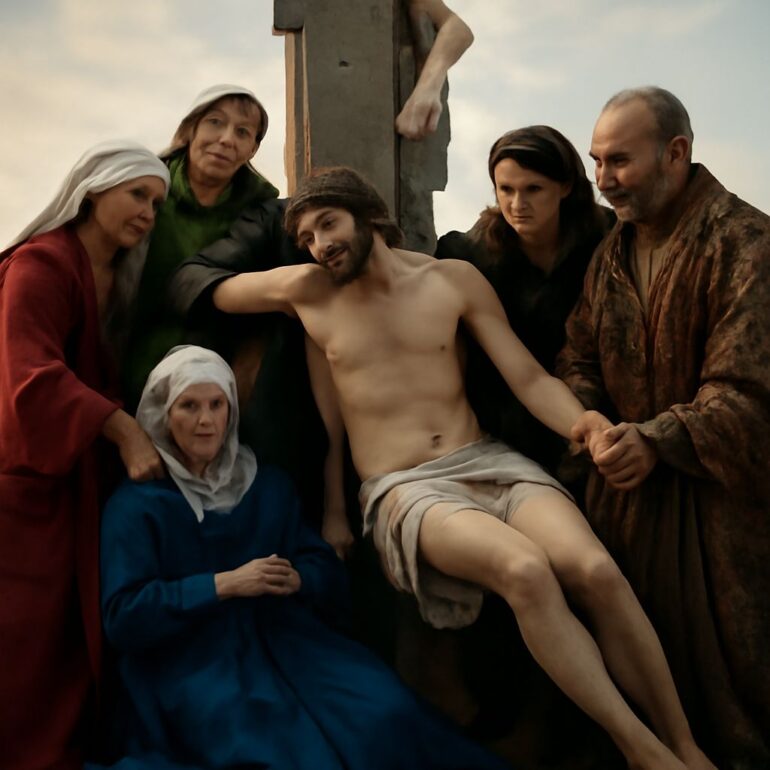
How did a movement of small communities become a worldwide church with a pope, bishops, and many forms of worship? The history of the Catholic Church begins with followers of Jesus in the first century, but its institutions took shape over many generations. These traditions preserve memories of those beginnings while reflecting decisions, disputes, and encounters with different societies.
History of Catholicism: The earliest communities
The history of Catholicism begins within the Jewish world of the eastern Roman Empire. Jesus and his first followers were Jews, and the earliest believers proclaimed that he had risen from the dead. Communities formed in Jerusalem and beyond, and missionaries carried the message to non-Jews as well. Letters attributed to Paul, written in the first century, show groups meeting for prayer, instruction, shared meals, and care for members. They also reveal disagreements about conduct and authority.
The Acts of the Apostles describes believers gathering for teaching, fellowship, prayer, and the breaking of bread. It is a theological account as well as an ancient source; its portrait should be read alongside the letters, which address particular communities and their problems. The Eucharist, the ritual meal commemorating Jesus, developed from practices rooted in these early gatherings.
Leadership was not everywhere organized in an identical way. The New Testament refers to apostles, elders, overseers, and deacons, but the responsibilities attached to those terms changed over time. By the early second century, letters of Ignatius of Antioch describe a bishop working with presbyters and deacons in several communities. The later offices of bishop, priest, and deacon have a historical relationship to these roles, though their full institutional forms emerged gradually.
Councils, creeds, and imperial support
A major change came in the fourth century. In 313, the agreements associated with the Edict of Milan provided for religious toleration in the Roman Empire. Imperial support gave Christian leaders new resources and public standing, while also drawing them into the politics of empire. Christianity did not become the empire’s official religion until later in the century.
At the Council of Nicaea in 325, bishops addressed a dispute over the relationship of the Son to the Father. Their creed described the Son as being of the same substance as the Father. The Council of Constantinople in 381 further shaped the creed widely used in Christian worship. Councils gave collective expression to doctrine, even as their decisions were contested and interpreted over time.
Bishops of Rome claimed a distinctive responsibility associated with Peter, the apostle whom Catholic teaching regards as the first pope. The reach and practical exercise of Roman authority, however, developed over centuries. Bishops in other major centers also held considerable influence. The distinction matters because a modern map of church government cannot simply be projected back onto the first generation of believers.
A medieval church with eastern and western traditions
As the western Roman Empire fragmented, monasteries became important centers of prayer, learning, farming, and manuscript copying. Monks followed communal rules; the Rule of Saint Benedict, composed in the sixth century, became especially influential in western Europe. Bishops and monasteries worked within changing political arrangements, and rulers frequently sought a voice in church affairs.
Disputes over the appointment of bishops came to a head in the Investiture Controversy of the 11th and 12th centuries. The issue was consequential: bishops held spiritual offices and could also control land and exercise political power. The Concordat of Worms in 1122 established a compromise between pope and emperor over aspects of their selection and installation.
The divide between the churches of Rome and Constantinople also developed over a long period. The mutual excommunications of representatives in 1054 became a prominent marker of the East-West schism, though differences over authority, language, and worship had deeper roots and relations continued afterward. Eastern Christians in communion with Rome today have their own liturgical and legal traditions. For students of Catholicism, history includes more than the Latin West, even though much familiar medieval evidence comes from western Europe.
Medieval worship was equally shaped by local practice and institutional decisions. The Fourth Lateran Council in 1215 used the term transubstantiation to explain the Eucharistic change in substance. It also required annual confession and reception of communion at Easter under specified conditions. Such decisions show how teaching, pastoral discipline, and ordinary religious life influenced one another.
Reformation and renewal
The sixteenth-century Reformation challenged papal authority and produced lasting divisions among western Christians. Reformers disputed teachings and practices including indulgences, church authority, and the sacraments. The Council of Trent, meeting in stages from 1545 to 1563, responded with doctrinal decrees and measures for reform.
Trent affirmed seven sacraments and addressed the education and conduct of clergy. Its reforms included provisions for seminaries to train future priests. The Roman Missal issued in 1570 helped standardize worship in much of the Latin Church, although established rites with sufficient antiquity could continue. Catholic reform also took shape through religious orders, schools, missions, and local initiatives; it was not confined to one council chamber.
Expansion brought the church into societies across the Americas, Africa, and Asia. Missionaries translated texts and built institutions, often alongside European colonial powers. The results varied by place: conversions and enduring communities existed alongside coercion, cultural destruction, and disputes over the treatment of Indigenous peoples. A history of Catholic institutions needs both the experience of local communities and the records of the authorities who governed them.
Modern councils and a global institution
The First Vatican Council, held in 1869–1870, defined papal infallibility under specific conditions: a pope must speak definitively on faith or morals in his role as pastor and teacher of all Christians. It did not declare every papal statement infallible. Political upheaval interrupted the council, but its definition remained a major reference point for later discussions of authority.
The Second Vatican Council met from 1962 to 1965. Its constitution on the liturgy, Sacrosanctum Concilium, called for active participation by the faithful and allowed a wider role for local languages. Subsequent reforms changed the way many congregations experienced Mass. The council also addressed relations with other Christians, other religions, and the modern world.
Today the church is organized through dioceses led by bishops, alongside religious orders and other institutions. The pope and the offices of the Holy See serve a worldwide communion, while local churches operate in distinct languages and cultures. Lay people participate in worship, education, charitable work, and institutional life, although authority and responsibilities differ by office. Catholic bishops oversee dioceses, appoint pastors, and bear responsibility for local administration. Catholic communities also sustain schools and charities whose public work depends on local resources, civil law, and decisions made by their governing bodies.
Does continuity mean nothing changed?
Continuity and change coexist. The Eucharist and the office of bishop connect present communities with early Christian practice, while creeds, laws, and liturgical forms developed through identifiable decisions and debates. Reading those changes in context makes it possible to understand both the church’s claims about its origins and the institutions visible today.
